
Stinging Insects
Mud Dauber
Sceliphron caementarium
IdentificationHow to Identify Mud Dauber
Quick Answer
Mud daubers are distinctive wasps with extremely thin, thread-like waists connecting thorax and abdomen. They can be black, metallic blue, or black and yellow depending on species.
Full identification notes
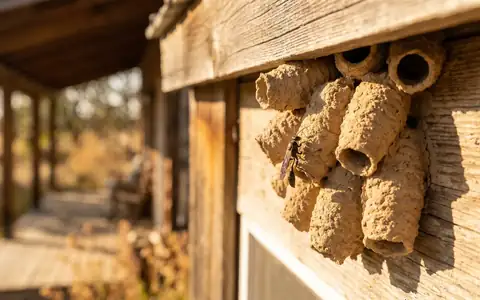
They build characteristic mud tube nests on walls, often in sheltered areas like garages and porches.
Free
Re-Service Between Visits
4.9/5
Google Rating
9 to 5
Office Hours, Mon to Fri
Mud Dauber Behavior & Habits
Understanding how mud dauber behave helps prevent infestations
Unlike social wasps, mud daubers are solitary and non-aggressive.
More about their habits
They rarely sting even when handled. Females build mud nests, stock them with paralyzed spiders, and lay eggs. Each female works alone, so there's no colony to defend and no swarm response if you walk past a nest.
Mud Dauber Risks & Dangers
What mud dauber can do to your health and property
Health Risks
Mud daubers are among the least aggressive wasps and rarely sting.
Property Damage
Mud nests can be unsightly and may stain painted surfaces.
Full health and property details
Health Risks
They're not defensive of their nests. Stings only occur if one is stepped on or trapped against skin.
Property Damage
Nests built in equipment (like jet engines) have caused problems, but residential damage is minimal.
Signs of Mud Dauber Infestation
Look for these indicators in your home
Signs You Have Mud Dauber
What homeowners spot first
- Cylindrical mud tubes on walls or ceilings
- Pipe organ-shaped nest clusters
- Large wasps with very thin waists
More signs to look for
- Wasps carrying mud or spiders
- Nests in garages, sheds, and covered porches
Mud Dauber in Boise & the Treasure Valley
Most of our mud dauber calls come in from June through August, when females are actively building tube nests under eaves, on shed walls, and inside open garages.
More on what we see locally
We see the heaviest activity in older Boise neighborhoods like the North End, Hyde Park, and the East End, where mature trees and shaded porches give females ideal spots to work. The good news for homeowners: these wasps hunt spiders to stock their nests, so a healthy mud dauber population often means fewer hobo and black widow spiders along the foundation.
How We Handle Mud Dauber
What our approach looks like
Most mud dauber calls don't need an aggressive treatment, since these wasps are solitary and rarely sting.
Our full approach
When customers want them gone, we knock down old tubes, treat the surfaces where they were built, and apply a residual product to discourage rebuilding. Our $49 initial service covers nest removal for subscription customers, and our free re-service guarantee means we'll come back if new tubes show up.
How to Prevent Mud Dauber
Steps you can take to reduce the risk of infestation
- Check eaves, porch ceilings, and shed walls in late spring before nests get built
- Scrape off old mud tubes once the wasps have emerged so females do not reuse the spot
- Seal gaps in siding, vents, and shed roofs that give females sheltered nesting spots
More prevention steps
- Keep garage doors closed during the day from June through August
- Paint or seal bare wood surfaces, which are easier for females to attach mud to
- Reduce spider populations along the foundation, since spiders are the prey that draws mud daubers in
Mud Dauber Questions Answered
Common questions about identification, prevention, and treatment
Call (208) 297-7947Should I remove mud dauber nests in Boise?
Quick answerMud daubers are beneficial and non-aggressive, so most nests can be left alone.
If a nest is right next to a doorway, in a frequently used garage, or somewhere kids touch it, we'll scrape it off and treat the surface so females don't rebuild. Old empty tubes can come down after the wasps emerge in late summer.
Are mud daubers dangerous to people or pets?
Quick answerAlmost never.
Mud daubers are solitary wasps, which means they have no colony to defend and no swarm response. A sting only happens if one gets stepped on barefoot or trapped against skin. Dogs and cats can occasionally get stung if they bat at a low nest, but reactions are usually minor unless the pet is allergic.
How are mud daubers different from paper wasps or hornets?
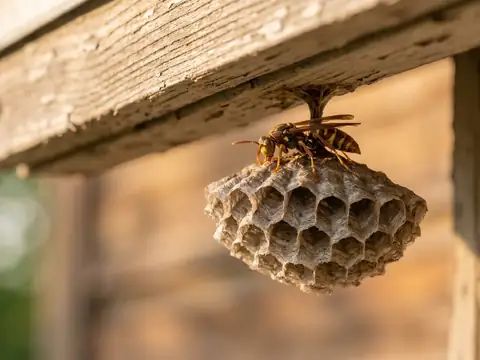
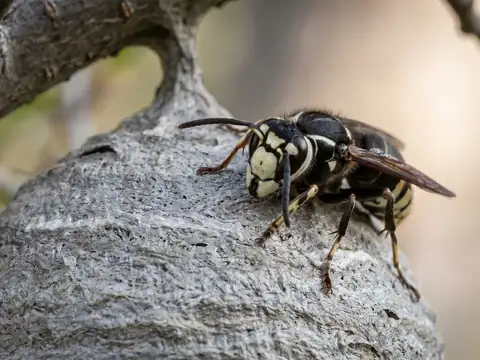
Quick answerMud daubers are solitary and build distinct cylindrical mud tubes, while paper wasps and bald-faced hornets are social and build paper nests with hundreds of workers.
The thin, thread-like waist is the easiest visual tell. If you see a wasp carrying a ball of mud or a paralyzed spider, that's a mud dauber, not a hornet.
Similar Pests
Learn about other pests in this category

Related Guides
Expert articles related to mud dauber in Idaho
 Pest Identification
Mud Daubers in Idaho: The Solitary Wasp Building Tubes on Your Boise Eaves (and Why You Don't Need to Panic)
Read Article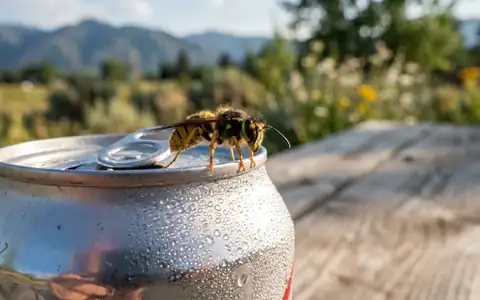 Safety
Wasp and Hornet Sting First Aid: What to Do, When to See a Doctor, and How to Prevent the Next Sting (Idaho 2026)
Read Article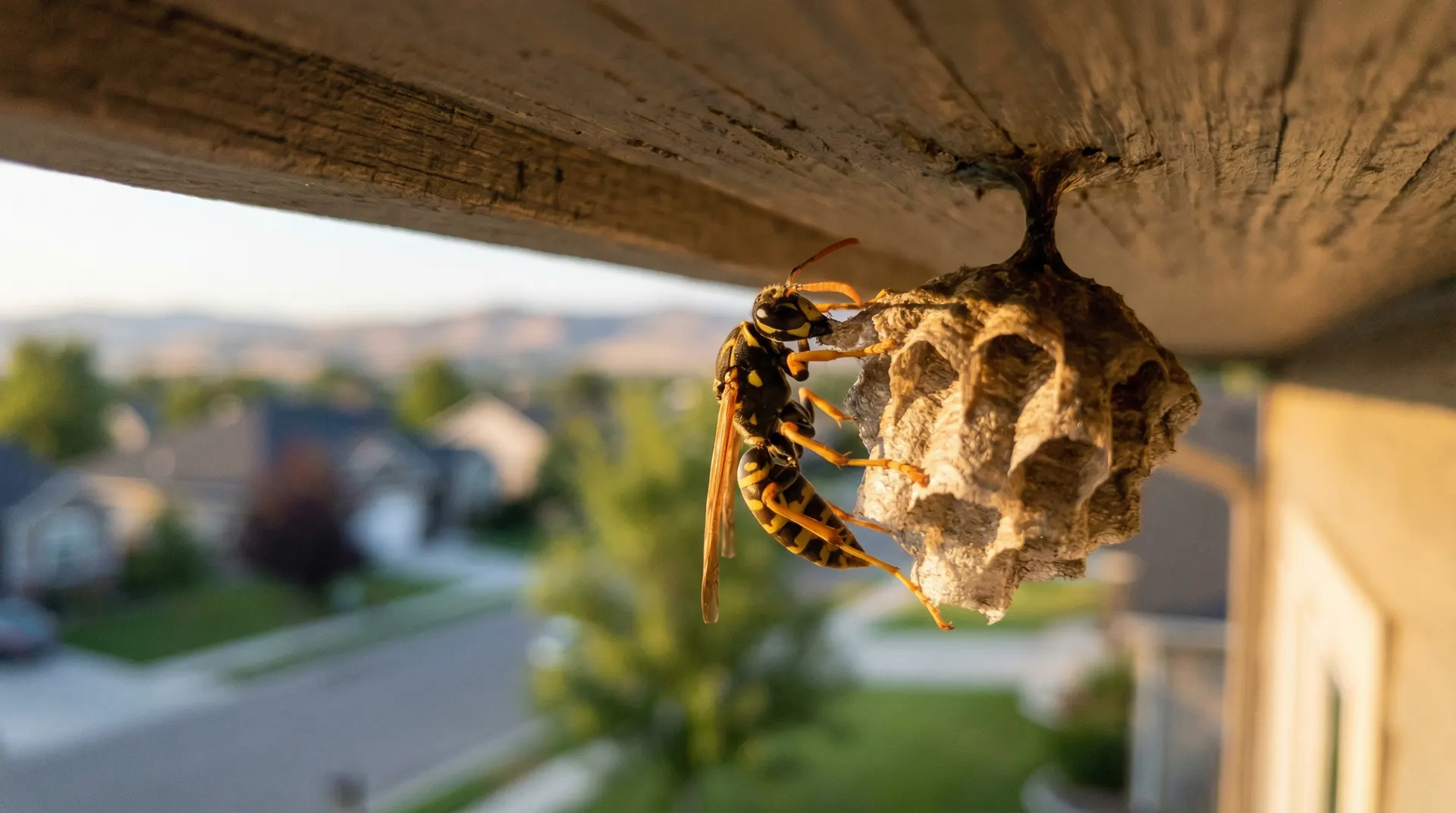 Seasonal Guide
Wasp Control in Boise: Why Late Summer Is the Most Dangerous Season and How to Handle Peak Aggression (2026 August Update)
Read Article
Think You Have Mud Dauber?
Call and we'll talk through your options. We usually get out within 24 to 48 hours.
Quarterly plans starting at
$119/quarter
- No-Obligation Quote
- Locally Owned
- Free Re-Service Between Visits
Our Pest Control Services
Complete pest protection. Professional solutions for every pest problem, on a quarterly plan or a one-time visit.
General Pest ControlLearn More
Year-round protection packages
Ant ControlLearn More
Carpenter & pavement ants
Spider ManagementLearn More
Black widows & hobo spiders
Rodent ControlLearn More
Mice, rats & voles
Wasp & HornetLearn More
Nest removal & prevention
Mosquito & OutdoorLearn More
Mosquitos, ticks & fleas
Eco-FriendlyLearn More
Pet & kid safe options
CommercialLearn More
Business & warehouse
Proudly Serving the Treasure Valley
Local technicians from the Treasure Valley, in Boise, Meridian, and surrounding communities.
Pest Control Resources
Expert tips & guides. Local pest knowledge from Boise's trusted exterminators