Quick answer
Those little dirt mounds between your patio pavers are almost always pavement ants. They love the sand-filled joints because the stones store heat, the sand is easy to dig, and food crumbs from the patio table are right there. DIY fixes like boiling water and dish soap kill the workers you see but never reach the queens, which sit 6+ inches below the slab. The fix that actually holds is a granular bait the foragers carry back, plus a perimeter spray and a sand-joint refresh. Green Guard treats patio paver ant nests in Boise for $49 to start, and same-day service is often available.
Key Takeaways
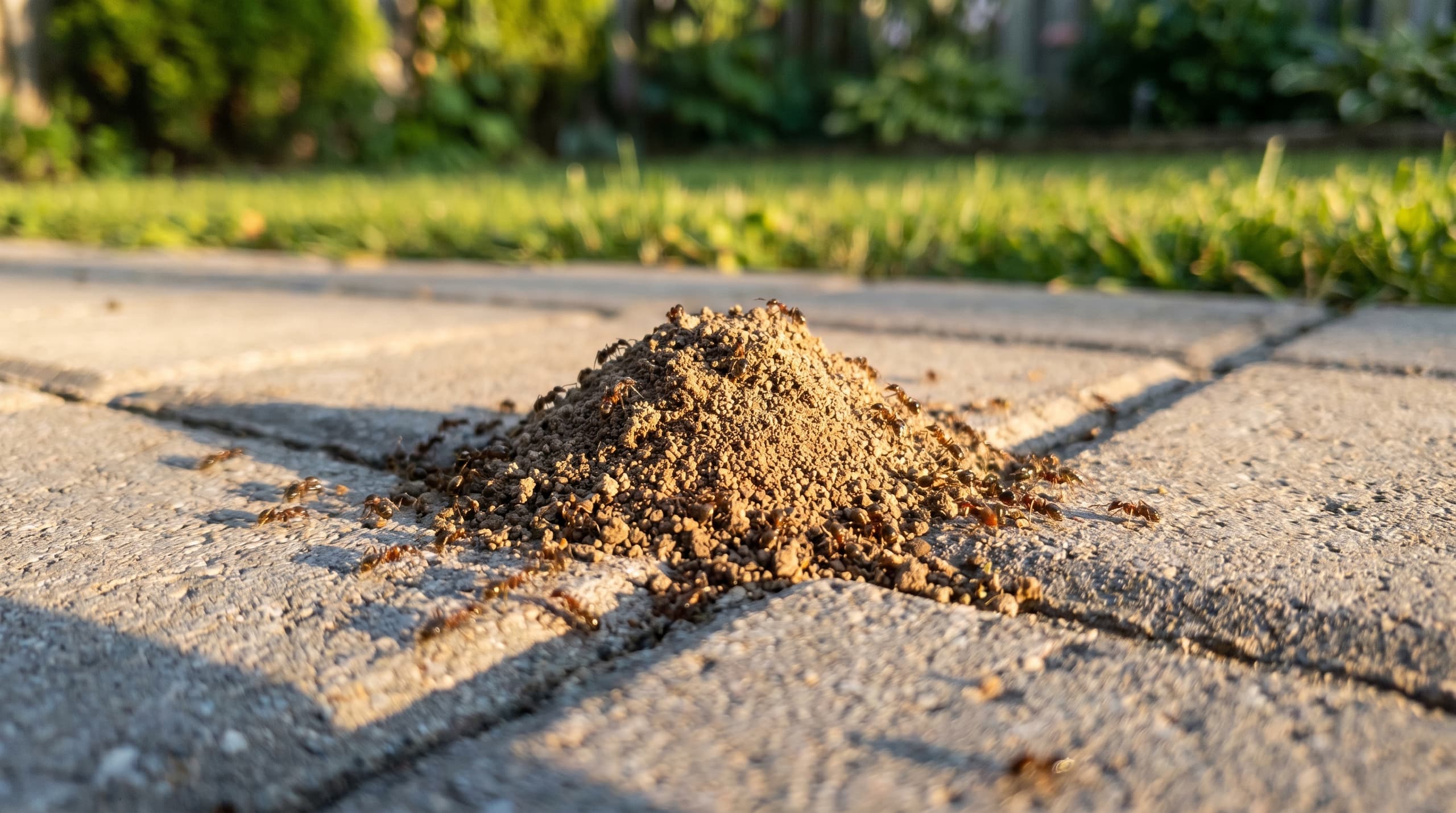
- The cone-shaped dirt piles between your pavers are pavement ant nests. They are the dominant outdoor ant species in the Treasure Valley.
- Pavers attract ants for three reasons: stored heat from the stones, loose polymeric or play sand in the joints, and food crumbs from outdoor dining.
- Boiling water, dish soap, and hardware-store ant granules kill foragers on contact but miss the queens 6+ inches under the slab. Mounds reappear in 7-14 days.
- The treatment that actually works pairs a slow-acting granular bait (carried back to the colony) with a perimeter spray and a refreshed sand-joint barrier.
- Paver ant problems in Boise tend to show up in newer subdivisions where polymeric sand has eroded after 3-5 summers.
In this article

Your Patio Pavers Have Quietly Become an Ant City
You sweep the patio Friday afternoon. By Sunday morning, those little volcano-shaped dirt piles are back between every other stone. The ants do not seem to care about you, the dog, or the can of Raid you blasted at them last weekend.
That is pavement ants, and in the Treasure Valley they are the most common outdoor ant we deal with. They are not a structural threat like carpenter ants. They will not eat your deck posts. What they will do is turn a $20,000 paver patio into something that looks like a gopher convention all summer long.
This guide walks through why you keep finding ants in patio pavers around Boise, why the boiling-water trick keeps failing, and what actually clears the nests for good. In our experience treating 2,500+ Boise-area homes, paver ants are busiest from Memorial Day through Labor Day. By late spring, paver colonies are already active across the Treasure Valley. The fix is the same every time, and it is not complicated. It just has to hit the queens, not the workers.
What Are Those Dirt Piles Between My Pavers?
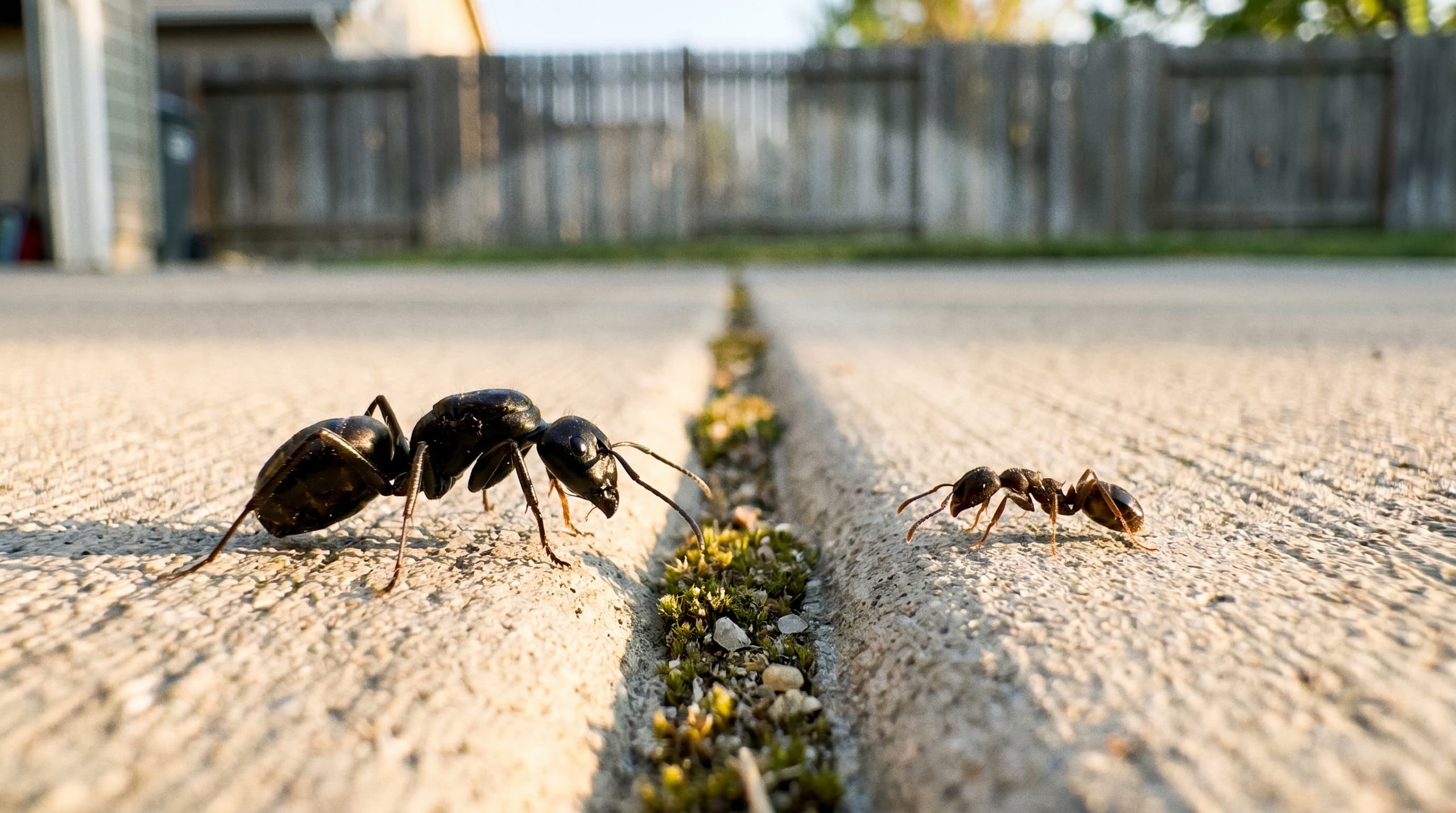
Those cone-shaped piles of fine dirt or sand are pavement ant excavation mounds. Workers dig out the loose joint sand to build tunnels and brood chambers under the slab. The mound sits on top because they have to put the displaced material somewhere. A patio with 30 mounds means one large colony, not 30 small ones. The queens and most of the brood live in a single nest 4 to 8 inches under the stones.
Why Pavement Ants Love Your Patio Pavers (3 Reasons)
Pavement ants did not pick your patio at random. Paver installations check every box for what they need to build a successful colony in the Treasure Valley climate.
- Stored heat. Concrete and stone pavers absorb sun all day and release it through the night. Underneath the slab, soil temperature stays 10 to 15 degrees warmer than open lawn. In April that means colonies start expanding 3-4 weeks earlier than nests in the yard. By June they are fully built out.
- Easy digging. The polymeric or play sand swept into your paver joints is the perfect tunneling medium. It compacts enough to hold a chamber but breaks loose when a worker pushes through. Native Boise clay is much harder to excavate. Given the choice, ants take the sand every time.
- Food on tap. Outdoor dining season runs May through October here. Crumbs, grease drips from the grill, spilled juice, dropped chips, dog food bowls. Every one of those is a foraging beacon. Pavement ants are generalists. If it is organic, they will eat it.
How to Spot a Pavement Ant Nest Under Your Patio
Most homeowners notice the dirt mounds first. There are a few other signs that tell you the colony is mature and worth a professional call instead of another can of spray.
- Cone-shaped mounds in the joints. Fresh dirt or sand piled like a tiny volcano right between two pavers. The hole at the top of the cone is the active entry.
- Trails along grout lines. Workers follow scent paths in straight lines down a joint, then disappear into the soil. If you see a steady two-way line of ants, you have a mature colony.
- Swarmers in late spring. In May and early June, pavement ant nests produce winged reproductives. You may see dozens of small winged ants on the patio surface for one or two days. That is the colony reproducing, and it means the original nest is at least 3 years old.
- Sand loss between stones. If your joints look low or empty and your stones are starting to rock when you step on them, ant tunneling is part of the cause.
- Ants indoors near the back door. Patio colonies often send foragers under the threshold and into the kitchen. If you have ants on the kitchen counter in spring, the patio nest may be the source.
Why DIY Fixes (Boiling Water, Dish Soap, Store Granules) Keep Failing
Search any forum and you will find the same five DIY tricks. Plenty of homeowners try all of them first. Here is why each one falls short for pavement ants under pavers.
- Boiling water. A pot of boiling water poured into the mound kills the workers in the top inch of the tunnel and cooks maybe a dozen brood. The queen sits 6 to 8 inches below the slab, well below the kill zone. Water cools fast in soil. The colony re-routes around the dead chamber in 48 hours.
- Dish soap and water. Same problem. Soapy water suffocates the ants it touches. It does not penetrate deep enough to reach the queen. You will see fewer ants for a week, then the mounds come right back.
- White vinegar. Disrupts scent trails on the surface. Does nothing to the nest. Foragers re-mark a new path within hours.
- Cinnamon, coffee grounds, peppermint oil. These are repellents, not killers. They push workers to a different paver. The colony stays intact and keeps growing.
- Hardware-store ant granules. Most are contact killers with a fast knockdown active ingredient like bifenthrin. Workers die before they can carry anything back to the nest. The queen never gets dosed. Some products are repellents that scatter the colony into multiple smaller nests (called colony budding), which makes the problem worse, not better.
- Sprays from a can. Same issue. Kills what you see. Leaves the queen producing 30+ new workers per day.
How Green Guard Stops Ants in Patio Pavers for Good
The fix for ants in patio pavers is not exotic. It just has to hit the colony in the right way. When our technicians treat a paver patio in Boise, we run the same three-part process every time.
- Step 1: Slow-acting granular bait in the joints. We place a bait formulated for pavement ants that the workers do not recognize as a threat. They carry it back to the nest, feed it to other workers, and feed it to the queen. The bait needs 10 to 14 days to work through the whole colony.
- Step 2: Hospital-grade perimeter spray. We treat a 3-foot barrier around your patio, the foundation of the house, and any adjacent garden beds. This stops new colonies from moving in once the original one is gone and breaks any indoor foraging trails. Same organic-based product we use inside houses with kids and pets.
- Step 3: Sand-joint refresh recommendation. Empty joints invite re-infestation within one season. We tell you when to top up with polymeric sand and when to re-seal. We do not do the masonry or sealing work ourselves. That part is a homeowner or contractor job.
Why This Hits Newer Treasure Valley Subdivisions the Hardest
Paver ant problems tend to show up in newer Boise-area neighborhoods. There is a pattern, and it has to do with how paver patios age.
Many subdivisions built in the last decade, in Meridian, Boise, and the Eagle foothills, came with builder-grade paver patios in the 200 to 600 square foot range, set on polymeric sand. Polymeric sand works great for the first 2-3 years. By summer four or five, freeze-thaw cycles, sprinkler runoff, and basic foot traffic have eroded the joint surface. Once the polymer breaks down, the underlying play sand is exposed. That is when pavement ants move in at scale.
If your home is in a newer subdivision and your patio is 3 to 6 years old, you are squarely in the window where colonies establish. Older Boise homes (think North End or East End built before 2000) more often have poured concrete or brick patios on mortar, which ants cannot tunnel into the same way.
Tired of Sweeping the Same Mounds Every Weekend?
Spent another weekend sweeping the patio? We can help. Same-day service is often available. The initial visit is $49 for new subscription customers, covers your full property, and includes the bait placement and perimeter spray that knocks out paver ant colonies.
Call (208) 297-7947 or grab a quote online. Locally owned in Boise, 4.9 stars across 170+ Google reviews, and if the ants come back between scheduled visits, we come back free.
What Green Guard's Plans Cost
| Plan | Home size | Price |
|---|---|---|
| Initial Service with a quarterly or bimonthly plan | Any home size | $49 |
| Quarterly Service | Up to 2,500 sq ft | $119 |
| 2,501 to 4,000 sq ft | $139 | |
| 4,001 to 5,500 sq ft | $159 | |
| Bimonthly Service | Up to 2,500 sq ft | $99 |
| 2,501 to 4,000 sq ft | $119 | |
| 4,001 to 5,500 sq ft | $139 | |
| One-Time Service | Up to 2,500 sq ft | $200 |
| 2,501 to 4,000 sq ft | $225 | |
| 4,001 to 5,500 sq ft | $250 |
Keeping Ants Out of Your Pavers After Treatment
Treatment clears the colony. Prevention keeps the next one from moving in. Three things matter most.
- Refresh your polymeric sand every 4-5 years. Sweep new polymeric sand into the joints, mist it, and let it cure. This rebuilds the seal ants tunnel through. If you have not done this since the patio was installed, it is overdue.
- Sweep the patio weekly during outdoor dining months. Crumbs and grease drips are the foraging beacon. A 60-second sweep after each meal cuts forager pressure dramatically.
- Move pet bowls inside or onto a hard tray. Dog food on the patio is a major ant magnet. If the bowl has to stay outside, put it on a tray with a moat of soapy water around the base.
- Fix any sprinkler heads spraying directly onto the patio. Constant moisture in the joints rots polymeric sand and softens the soil under the slab. Aim heads at the lawn, not the stones.
- Stay on quarterly service. One visit goes after the active colony. Quarterly visits keep the bait stations and perimeter barrier working, which makes it much harder for the next colony to settle in. This is what we do for every paver patio customer in the Treasure Valley.
Ready to Get Your Patio Back?
Pavement ants under your pavers are not a structural emergency, but they are also not going away on their own. Every weekend you spend sweeping mounds is a weekend the colony is rebuilding underneath. Our $49 initial treatment includes the bait placement, the perimeter spray, and a full property inspection.
Call (208) 297-7947 to book. Same-day service is often available. Free re-service guarantee between visits. Give the bait 10 to 14 days to work through the colony.
Frequently Asked Questions
How do I get rid of ants on my pavers?
Quick answerSkip the boiling water and dish soap.
They kill the workers you see but never reach the queen 6 to 8 inches below the slab, so mounds come back in 7 to 14 days. The fix that holds is a slow-acting granular bait the foragers carry into the nest, paired with a perimeter spray around the patio. Green Guard treats Boise patio paver colonies for $49 to start, with a free re-service guarantee if any mounds reappear.
How do I get rid of ants on my outdoor patio?
Quick answerThree steps in this order.
First, remove the food source by sweeping nightly and moving pet bowls inside. Second, treat the active nest with a colony-killer bait, not a contact spray. Third, refresh the polymeric sand in your paver joints so the next colony does not move in. Most Boise homeowners need a professional bait product because hardware-store granules kill workers before they get the bait back to the queen.
What smells do ants absolutely hate?
Quick answerPeppermint, white vinegar, cinnamon, and citrus oils are the main ones.
They work as repellents on indoor counter surfaces for a few hours at a time. Outdoors on a paver patio, they do almost nothing. Wind, sun, and watering wash the scent off fast, and the colony just re-routes around the treated joint. For an outdoor pavement ant nest, repellents move the problem rather than fix it.
How to get rid of ants in block paving naturally?
Quick answerThe honest answer is that natural methods rarely clear an established pavement ant colony under block paving.
Boiling water, soap, vinegar, and essential oils all kill on contact but cannot reach the queen 6 to 8 inches below the stones. The closest thing to a natural fix is keeping the paver joints fully sealed with polymeric sand and removing all food debris, which makes the patio inhospitable. Once a colony is already established, an organic-based bait is the only thing that takes out the queen without breaking the patio open.
Will ants damage my patio pavers?
Quick answerPavement ants do not eat the stones, but their tunnels do damage the patio over time.
As workers excavate the joint sand, the bedding layer below the pavers loses support. After 2 to 4 years of an active colony, you may see stones rocking under foot traffic, joints losing height, or sections of the patio settling unevenly. A pavement ant colony is a slow drain on the integrity of the install, not a fast one, but the longer it sits, the more sand it moves.
How fast can Green Guard treat ants in my Boise patio?
Quick answerSame-day service is often available, and we usually get out within 24 to 48 hours.
The patio treatment itself takes 30 to 45 minutes. You will see forager activity drop within 48 hours, and the bait needs 10 to 14 days to work through the colony. We service all of Boise, Meridian, Eagle, Nampa, Caldwell, Star, and Kuna.