Quick answer
Professional mosquito control in Boise starts with a $49 first visit (with a quarterly pest plan) and runs about every 21 to 30 days during the active season for the outdoor add-on. The treatment is a barrier spray on shrubs, fence lines, and the shaded vegetation where mosquitoes rest. It's organic-based, safe for kids and pets once dry, and yes, it works (most homeowners see a noticeable drop in bites within a few days).
Key Takeaways
- Mosquito control in Boise starts with a $49 first treatment with a quarterly plan, with the outdoor mosquito add-on layered on top
- Treatment runs every 21 to 30 days during active season (May through September) because product breaks down faster in Idaho's UV and irrigation cycles than the 90-day pest barrier
- What's actually sprayed: a low-residual barrier on shrubs, ground cover, fence lines, and shaded eaves where adult mosquitoes rest during the day
- Yes, it works. Adult populations drop noticeably within a few days. DIY foggers, citronella, and zappers don't move the needle the same way
- Pet and kid safe once dry (about 30 to 60 minutes). Free re-service guarantee between visits if mosquito pressure spikes
In this article

How Much Does Mosquito Control Cost in Boise?
Mosquito control in Boise starts with a $49 first treatment when you sign up for a quarterly pest plan, with the outdoor mosquito add-on layered on top of that base service. The add-on covers a barrier spray on shrubs, fence lines, and the shaded vegetation where adult mosquitoes rest. Most Treasure Valley homes run the add-on every 21 to 30 days during active season (May through September). You get our free re-service guarantee on the base plan, so if mosquito pressure spikes between visits, we come back at no extra charge. Call (208) 297-7947 for a quote on your exact property.
As of June 2026, that $49 first service is the entry point for new customers in Boise, Meridian, Eagle, Nampa, Caldwell, Kuna, and Star. Quarterly treatments after the first one run $119, $139, or $159 depending on home size (up to 2,500, 2,501 to 4,000, and 4,001 to 5,500 square feet, respectively). The outdoor mosquito add-on is priced per visit based on yard size and gets quoted when we walk the property.
Pest Plan Prices (Before the Mosquito Add-On)
| Plan | Home size | Price |
|---|---|---|
| Initial Service with a quarterly or bimonthly plan | Any home size | $49 |
| Quarterly Service | Up to 2,500 sq ft | $119 |
| 2,501 to 4,000 sq ft | $139 | |
| 4,001 to 5,500 sq ft | $159 | |
| Bimonthly Service | Up to 2,500 sq ft | $99 |
| 2,501 to 4,000 sq ft | $119 | |
| 4,001 to 5,500 sq ft | $139 | |
| One-Time Service | Up to 2,500 sq ft | $200 |
| 2,501 to 4,000 sq ft | $225 | |
| 4,001 to 5,500 sq ft | $250 |
What Does Professional Mosquito Treatment Actually Involve?
Most homeowners picture a guy in coveralls with a backpack fogger blasting clouds of mist into the air. That's not really what modern mosquito control looks like, and it's not what we do.
A professional mosquito treatment in Boise is a three-part job. Each part targets a different stage of the mosquito's life cycle, and that's why it works better than any single DIY tool.
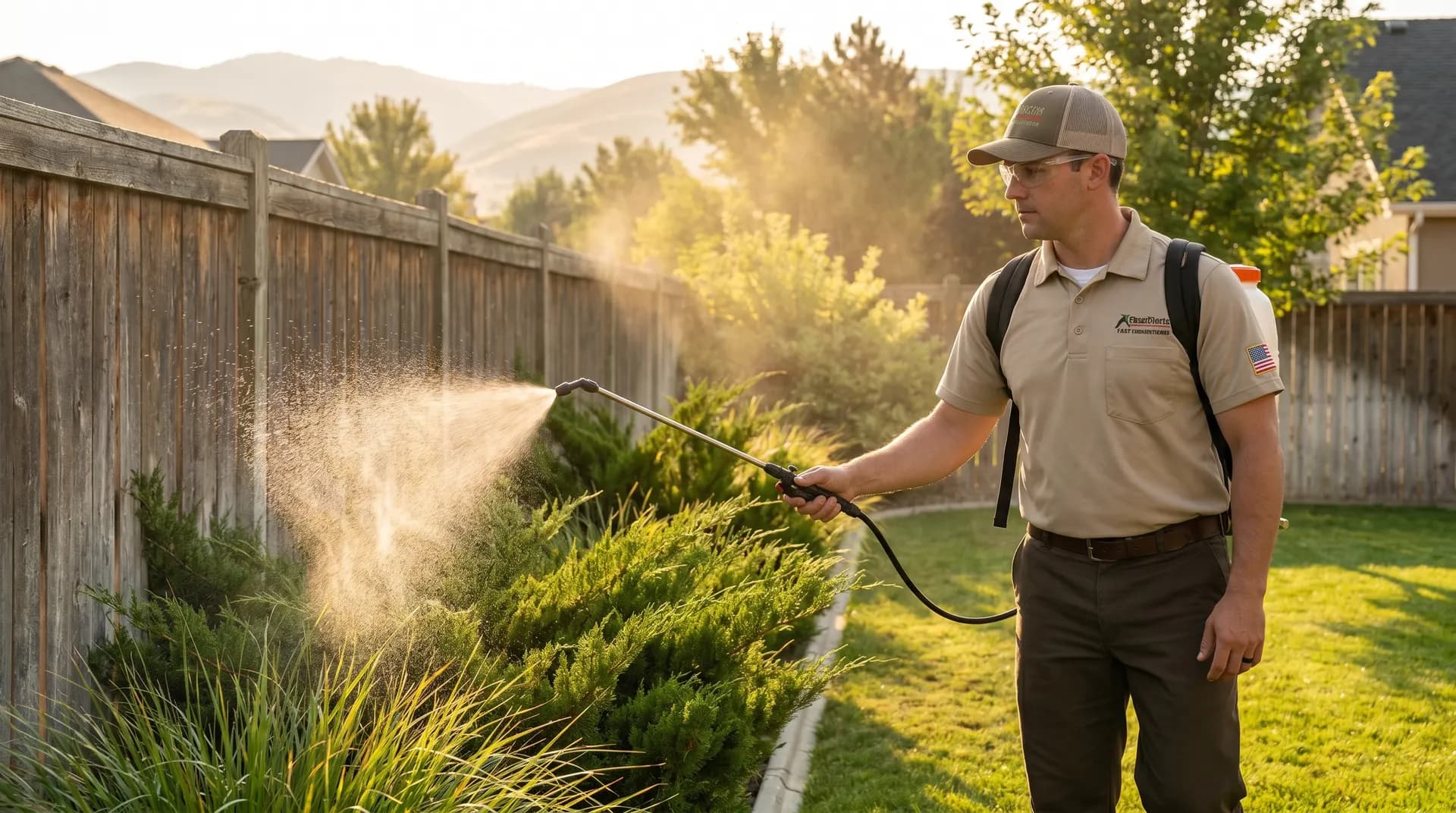
- Barrier spray on resting vegetation. Adult mosquitoes don't fly around all day looking for blood. They rest in cool, shaded spots: shrub interiors, dense ground cover, the underside of eaves, fence lines, ornamental grasses. Spraying those harborage areas with a low-residual product kills the adults they contact and leaves a barrier that knocks down the next wave that lands there.
- Breeding-site treatment around the yard. Anywhere standing water collects (irrigation valve boxes, plant saucers, low spots that hold runoff for more than 24 hours) gets flagged, treated, or recommended for drainage repair. Cutting off the nursery is more durable than spraying adults.
- Larval control in water you can't drain. Rain barrels, ornamental ponds, water features, and french-drain catch basins get treated with a biological larvicide (Bti, a soil-derived bacterium that targets mosquito larvae and nothing else). It's the same active ingredient sold as Mosquito Dunks at hardware stores, just applied where it actually does the most good.
How Often Do You Need Mosquito Treatment in Boise?
Every 21 to 30 days during active mosquito season, which in the Treasure Valley runs roughly May through September. That cadence is shorter than our quarterly pest barrier (which lasts about 90 days) for two reasons. First, mosquito spray sits on plant surfaces that take direct UV. Second, irrigation washes product off vegetation faster than it would weather away on a dry foundation wall.
Here's the honest seasonal cadence for a typical Boise yard:
- April to early May. First treatment goes down right as overwintering Culex queens start laying. Hitting the population early keeps it from compounding.
- May through July. Treatments every 21 to 30 days. This is the build-up period when irrigation cycles and warm nights drive the fastest population growth.
- August. Peak Culex tarsalis activity (Idaho's main West Nile virus vector). Keep the 21 to 30 day cadence going or stretch slightly if pressure looks light.
- September. One last treatment as nights cool and irrigation winds down. After that, populations crash on their own.
- October through March. No outdoor mosquito treatment needed. Your quarterly pest barrier handles spiders, rodents, and overwintering insects on the regular schedule.
DIY Mosquito Control vs Professional Treatment: An Honest Comparison
We're not going to tell you DIY is worthless. It's not. Standing-water elimination is the single biggest lever you can pull, and you don't need to pay anyone to walk your yard and dump plant saucers. But there's a clear line between what DIY can do and what it can't.
Here's how the common DIY tools actually perform against Treasure Valley mosquitoes:
- Standing-water source reduction. Very effective. Dumping containers, fixing low spots, drilling drain holes in valve boxes. This is the DIY work that matters most. Do this even if you hire a pro.
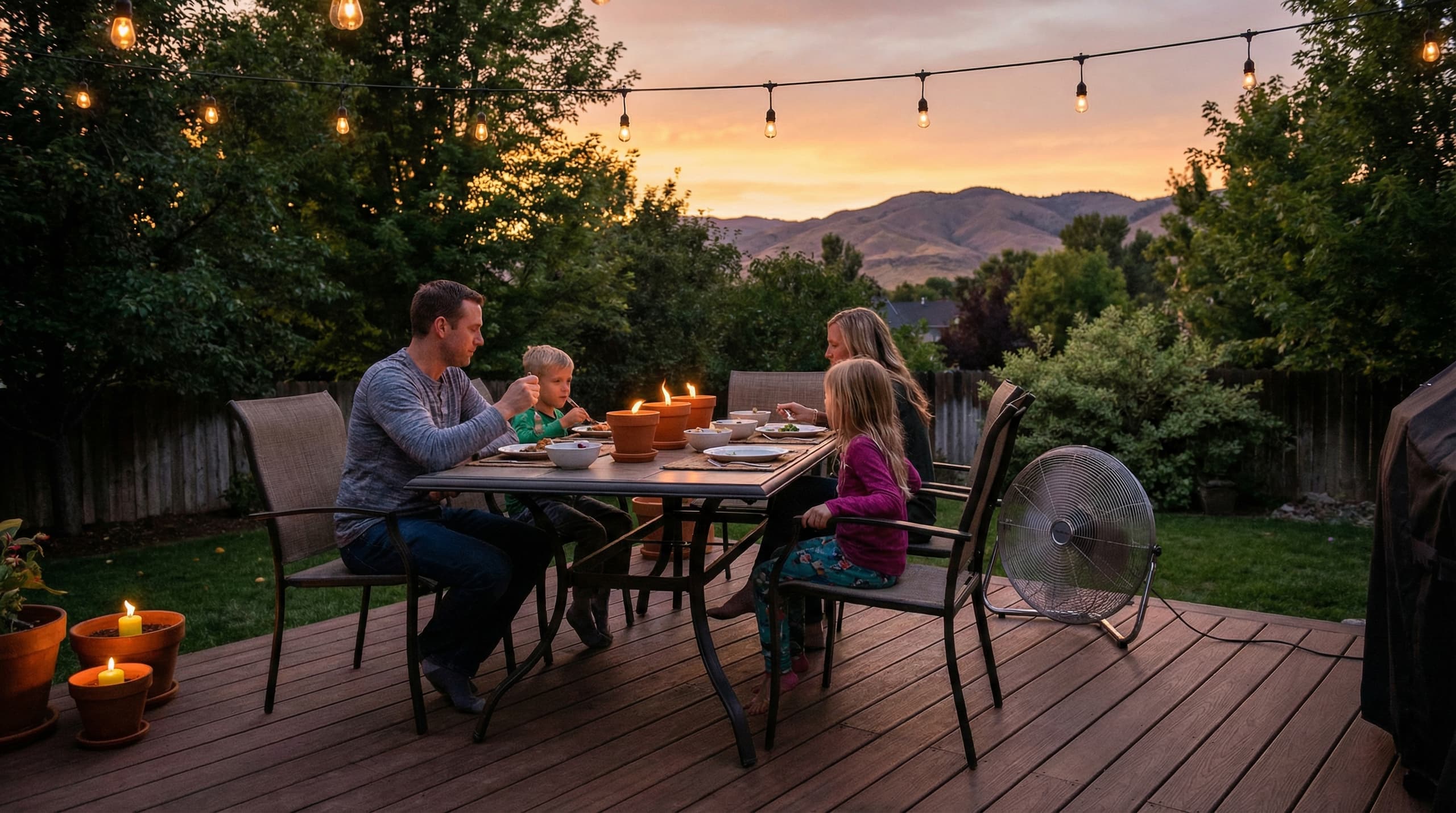
- Citronella candles and tiki torches. Limited. They create a small zone of repellency right at your seating area but don't reduce the yard population. Useful as a backup, not a primary tool.
- Bug zappers. Mostly useless against mosquitoes. Zappers attract and kill moths, beetles, and beneficial insects. Studies repeatedly show mosquitoes make up a tiny fraction of the catch.
- Mosquito misting systems. They work, but they're expensive to install and they spray on a timer whether mosquitoes are present or not. Overuse can build resistance and they kill pollinators in the spray zone.
- Ultrasonic and app-based repellents. No evidence they work. Skip them.
- DEET, picaridin, and oil of lemon eucalyptus on your skin. Genuinely effective for personal protection. They don't reduce the yard population, but they keep bites off you in the moment.
- Professional barrier spray. This is what knocks adult populations down at the yard level. Combined with your source reduction, it's the only tool that meaningfully changes the equation for an entire property.
Does Professional Mosquito Spray Actually Work?
Yes. When applied correctly to resting harborage areas, professional mosquito barrier spray cuts adult mosquito activity within a few days and holds the population down between treatments. The reduction isn't 100 percent (no honest pest pro will promise that, since mosquitoes constantly fly in from beyond your property line), but the difference is often the gap between avoiding the backyard and actually using it.
The science is straightforward. Adult mosquitoes spend most of the day resting on cool, shaded plant surfaces. A targeted barrier spray puts a low concentration of pyrethroid (the synthetic version of the natural pyrethrin found in chrysanthemums) on those exact surfaces. Mosquitoes contact the residue and die.
Two things determine whether it works for your yard. The applicator has to actually treat the resting areas (not just blast the air, which does nothing). And treatment cadence has to match your local mosquito pressure. If you sit next to the Boise River and skip a month, you'll feel it. If you're in a tighter subdivision with good drainage, you can stretch the schedule. That's the kind of judgment call we make based on what your property looks like on the walkthrough.
Is Mosquito Control Safe for Pets and Kids?
Yes, once the product is dry (about 30 to 60 minutes after application). Green Guard uses organic-based, EPA-registered formulations that are the same chemistry used in hospital and daycare vector control. The active ingredients break down quickly in sunlight, which is exactly why we have to retreat every 21 to 30 days.
The safety routine is simple. We let you know when we're coming. Pets and kids stay inside or off the treated areas during application and until the spray is dry. After that, normal yard use is fine. Dogs can roll in the grass, kids can play, and you can have neighbors over for a barbecue.
If you keep bees, want to protect a butterfly garden, or have a vegetable bed near a treatment zone, tell us at the walkthrough. We can work around pollinator-attractive plants and flag spots to skip. That's part of being a real local company instead of a route-truck operation that sprays the whole perimeter without looking.
Doesn't Ada County Already Handle Mosquitoes?
Ada County Weed, Pest and Mosquito Abatement does monitor mosquito populations and run targeted spraying when their CO2 traps catch mosquitoes that test positive for West Nile virus. They do important public-health work and the program is funded by your property taxes.
What the county does NOT do is treat individual residential yards for nuisance bites. Their mandate is disease surveillance and large-scale fogging in areas where WNV-positive mosquitoes show up. If you have a backyard barbecue ruined by bites at dusk, the county program isn't going to solve that.
That's the gap our outdoor mosquito add-on fills. We treat your property specifically: the shrubs along your fence, the eaves over your patio, the shaded ground cover in your landscape beds. It's complementary to county abatement, not a replacement.
When DIY Is Enough vs When to Call a Pro
Not everyone needs professional mosquito treatment. Here's the honest read on when to call and when to keep your money.
You're probably fine with DIY if your yard is dry, drains well, has minimal landscaping, and you only get bites a handful of evenings per summer. Walk the property once a week, dump anything holding water, and use repellent at dusk. Done.
Call us when at least two of these are true for your situation:
- Your property borders a canal, lateral ditch, retention pond, or the Boise River corridor
- Your yard has mature landscaping with dense shrubs, ground cover, or shaded beds that hold humidity
- You're getting bitten on the patio at dusk consistently and DIY hasn't moved the needle
- You have kids or grandkids you want to use the yard without coating them in DEET
- You're already on a quarterly pest control plan and can layer the outdoor mosquito add-on on top
- You've tried citronella, fans, and standing-water cleanup and bites are still ruining the evening
What to Expect From Your First Mosquito Treatment
If you book the outdoor mosquito add-on with your $49 initial pest service, here's what the first visit looks like. We aim for clear expectations so there are no surprises.
- Walkthrough first. The technician walks the property with you, identifies resting areas, flags standing water you may not have noticed, and asks about pets, pollinator gardens, and outdoor living areas.
- Targeted spray, not a blanket fog. Treatment focuses on shrub interiors, fence lines, eaves, dense ground cover, and shaded beds. Open lawn doesn't get sprayed because mosquitoes don't rest there.
- Larvicide where needed. Any standing water we can't drain (rain barrels, ponds, water features) gets a Bti larvicide tablet that targets mosquito larvae and nothing else.
- Time on site is usually 30 to 60 minutes for a typical Treasure Valley property.
- Dry time is 30 to 60 minutes. Stay off the treated areas until then. After that, normal use is fine.
- Results in a few days. Most customers notice a clear drop in evening bites within 3 to 5 days as the existing adult population dies off and new arrivals contact the residue.
Ready to Get the Mosquitoes Out of Your Yard?
Mosquito pressure in Boise peaks fast in July and August, and waiting until you can't sit on the patio means starting from a worse position. The earlier in the season we get out there, the smaller the population we're knocking down on the first visit.
Call (208) 297-7947 or ask about adding outdoor mosquito control to your quarterly pest plan. New customers start with a $49 first treatment, and the mosquito add-on layers on top of that. Free re-service between visits if pressure spikes. Locally owned, organic-based products, and the same crew treating 2,500+ Treasure Valley homes year-round.
For context on how mosquitoes fit into the larger summer pest picture, see our Idaho pest calendar and our peak mosquito season breakdown.
Frequently Asked Questions
How much does mosquito control cost in Boise?
Quick answerNew customers start with a $49 first treatment with a quarterly pest plan, and the outdoor mosquito add-on layers on top of that.
Quarterly base service runs $119, $139, or $159 depending on home size. The add-on is priced per visit based on yard size and gets quoted at the walkthrough. Call (208) 297-7947 for an exact number on your property.
How often do you need mosquito treatment in Boise?
Quick answerEvery 21 to 30 days during active season (roughly May through September).
That's shorter than the 90-day quarterly pest barrier because mosquito product sits on plant surfaces that take direct UV and irrigation, both of which break it down faster than it would weather away on a dry foundation.
Does professional mosquito spray actually work?
Quick answerYes.
A targeted barrier spray on resting vegetation (shrubs, fence lines, dense ground cover, shaded eaves) cuts adult mosquito activity within a few days and holds the population down between treatments. It doesn't get every mosquito (since they fly in from beyond your property line), but most Treasure Valley homeowners see a meaningful drop in evening bites.
Is mosquito control safe for pets and kids?
Quick answerYes, once the product is dry (about 30 to 60 minutes after application).
We use organic-based, EPA-registered formulations, the same chemistry used in hospital and daycare vector control. Keep pets and kids off treated areas until dry, then normal yard use is fine.
How long does mosquito treatment last?
Quick answerAbout 21 to 30 days in Boise during active season.
UV breakdown and irrigation cycles wear the product down faster than the 90-day pest barrier. Properties next to canals or the Boise River corridor often need treatment closer to every 21 days. Properties with good drainage and minimal landscaping can sometimes stretch closer to 30.