Quick answer
Peak mosquito season in Boise runs June through August, driven by Treasure Valley irrigation moisture and warm nights. Culex tarsalis is the West Nile virus vector here and peaks in late July and August. The fastest yard fix is killing every source of standing water and treating the resting vegetation around the perimeter. Green Guard's quarterly service includes that perimeter work, starting with a $49 first treatment.
Key Takeaways
- Peak mosquito season in Boise is June through August, mirroring the irrigation calendar
- Culex tarsalis is the West Nile vector in Idaho and peaks in late July and August
- Mosquitoes lay eggs in as little as a bottle cap of standing water, so weekly yard walks matter
- The Boise, Nampa-Meridian, Pioneer, and Settlers irrigation districts all push extra moisture into local yards
- Quarterly perimeter treatment (starting with a $49 first treatment) targets the shaded vegetation where mosquitoes rest by day
In this article

2026 Update: Mosquito Season in Boise Starts Earlier Than You Think
As of May 2026, mosquito activity is already picking up across the Treasure Valley. Nighttime temperatures are clearing 50 degrees and the major irrigation districts are running full canals. By the time you notice the first bite on the patio, the population behind it has usually been building for two to three weeks.
Peak season in Boise runs June through August. That window matches the irrigation calendar almost exactly, because mosquitoes need standing water to breed and the Valley provides plenty of it. We are sharing what treating Boise, Meridian, Eagle, and Nampa yards since 2010 has taught us about timing, species, and the fixes that actually move the needle.
For the month-by-month look at how mosquito season fits into the larger pest year, see our Idaho pest calendar. For a step-by-step yard prep guide, see our mosquito prevention guide for Boise yards.
Quick Answers: Boise Mosquito Season at a Glance
When is peak mosquito season in Boise? Late June through August, with the highest biting pressure in July. Activity tapers in September once irrigation shuts off and nights cool below 50 degrees.
Why does the Treasure Valley have so many mosquitoes? Four irrigation districts (Boise, Nampa-Meridian, Pioneer, and Settlers) push surface water into yards from late April through September. That water, plus the Boise River and warm summer nights, gives mosquitoes everything they need to multiply.
How do you reduce mosquitoes in a Boise yard? Kill every source of standing water on your property, treat the shaded shrubs and eaves where adults rest, and run fans on outdoor seating areas. A quarterly perimeter treatment from a licensed pro keeps the resting population low all season.
Boise Mosquito Species and When They Peak
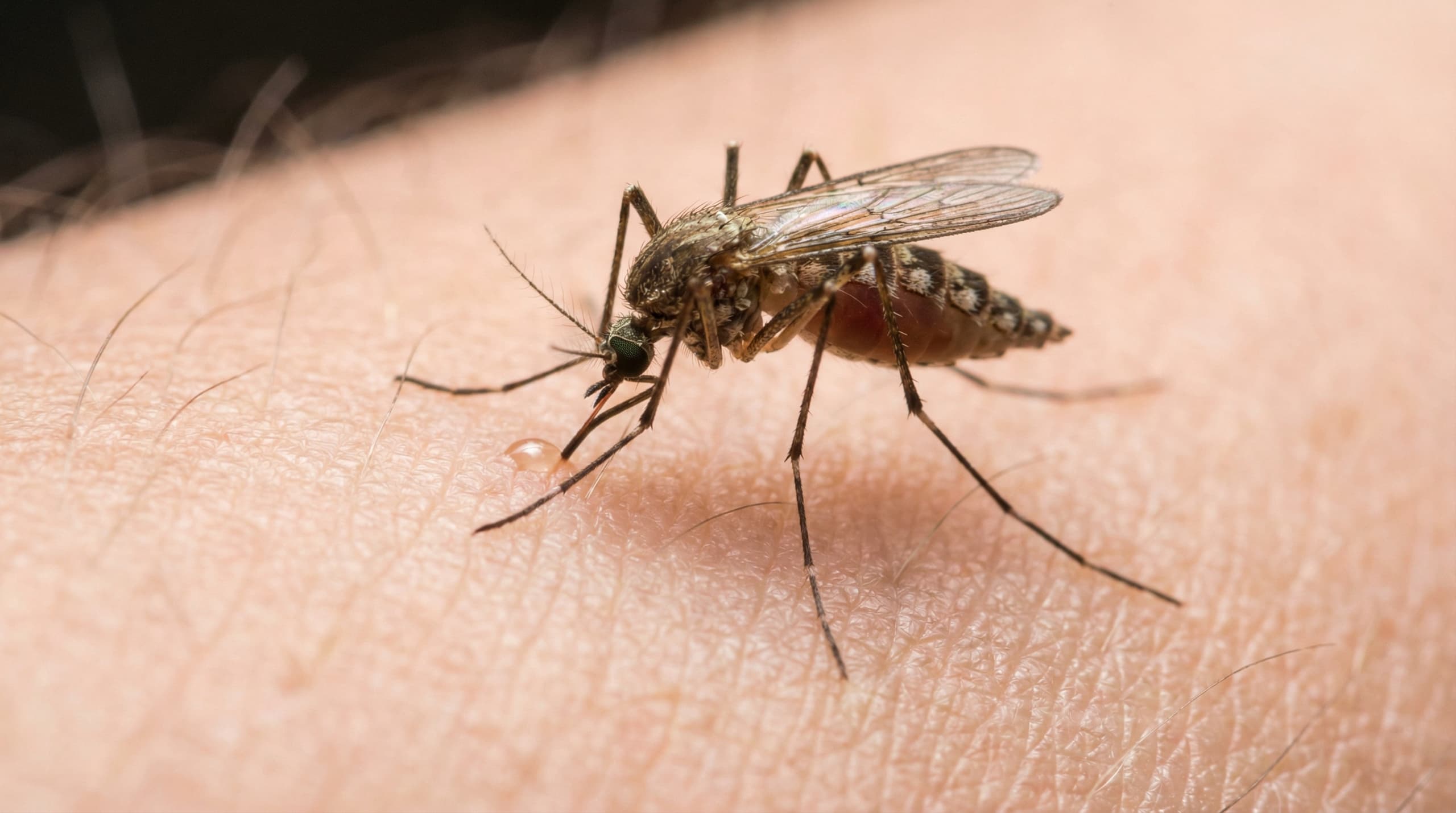
Idaho hosts about 40 mosquito species, but only a handful drive most of the bites and disease risk in the Treasure Valley. Knowing which ones are flying tells you how to protect yourself.
| Species | Peak Months | Time of Day | Why It Matters |
|---|---|---|---|
| Culex tarsalis | Late July through August | Dusk and night | Primary West Nile virus vector in Idaho. Feeds on birds first, then mammals. |
| Culex pipiens | July through August | Dusk and night | Common urban "house mosquito" around Boise neighborhoods. Secondary WNV vector. |
| Aedes vexans | June through August | Day and dusk | Aggressive floodwater mosquito. Population booms 7 to 10 days after irrigation cycles. |
| Aedes dorsalis | June through July | Day and dusk | Strong daytime biter. Common around irrigated fields and alkaline pools. |
| Ochlerotatus spp. | April through May | Day | Early-season snowmelt mosquitoes. First biters of the year in the foothills. |
If you are getting bitten in broad daylight, you are usually dealing with Aedes vexans or dorsalis. If the bites hit at dusk and after, it is most likely a Culex species, which is the group public health watches for West Nile virus.
When Are Mosquitoes Worst in Boise?
Mosquito activity in the Treasure Valley follows a predictable rhythm. Once you see the pattern, you can plan outdoor time around it.
- Peak months: June through August (irrigation season is in full swing)
- Worst time of day: Dawn (5 to 8 am) and dusk (6 to 9 pm)
- Worst conditions: Warm, still, humid evenings after a watering day
- Population surge: 7 to 10 days after irrigation or rainfall (egg-to-adult cycle)
- Decline: Mid-September, as nights cool and the irrigation districts shut off
Why Treasure Valley Irrigation Drives Mosquito Pressure
Most Boise homeowners have an irrigation account they barely think about. If you live in a yard that was a farm or orchard a generation ago, you almost certainly do. The four big districts feeding the Valley each push surface water through neighborhoods all summer.
Knowing which district serves you matters for two reasons. First, if your yard floods on a fixed weekly schedule, your mosquito population will surge on a predictable lag. Second, ditches, head gates, and low spots in flood-irrigated yards are some of the most reliable breeding sites in the Valley. You can usually identify your district on your property tax statement or city utility account. Renters can ask the landlord.
- Boise Project Board of Control / New York Canal: Covers much of south Boise, east Boise, and parts of the Bench. Runs from roughly mid-April through mid-October.
- Nampa & Meridian Irrigation District: Largest district in the Valley. Covers most of Meridian, Nampa, and parts of southwest Boise. Pressurized and gravity systems.
- Pioneer Irrigation District: Serves Caldwell and parts of Nampa. Long history of flood and gravity delivery.
- Settlers Irrigation District: North Boise (Collister, State Street), Eagle, and Star. Many older neighborhoods still flood irrigate.
Where Mosquitoes Breed on Your Property
Mosquitoes need standing water, but surprisingly little of it. A single female lays 100 or more eggs in water as shallow as a quarter inch. These are the spots to check on every property.
- Plant saucers under potted patio plants. Easy to forget, perfect breeding pool.
- Bird baths that nobody refreshes. The water stagnates within a week.
- Clogged gutters where leaves trap a few inches of water above the soffit line.
- Old tires stored along fence lines. A classic mosquito nursery.
- Kids' toys: buckets, wagons, sandbox lids, water tables.
- Tarps and equipment covers on boats, RVs, smokers, woodpiles.
- Pet water dishes if they are not refreshed every day or two.
- Low spots in flood-irrigated yards where water sits for days after delivery.
How to Reduce Mosquitoes in a Boise Yard
Source reduction beats every other DIY method by a wide margin. Kill the breeding water and you kill the next generation. For the long-form yard prep checklist, see our mosquito prevention guide for Boise yards.
- Empty standing water weekly. Dump every container that holds water, even small ones.
- Refresh bird bath water twice a week. Or add a small fountain pump for movement.
- Clean gutters. Look for pooled water above the soffit, especially in summer.
- Fix irrigation pooling. Grade out low spots in the lawn where water sits more than 24 hours.
- Maintain pools and hot tubs. Proper chlorine prevents breeding. Cover skimmers.
- Stock ornamental ponds. Mosquitofish (sometimes free from vector control) eat larvae.
- Cover rain barrels. Fine mesh blocks adults from laying eggs.
- Mow and trim. Adult mosquitoes rest in tall grass and dense shrubs by day.
Personal Protection That Actually Works
Yard work alone does not stop every bite, especially in flood-irrigated neighborhoods. Layer in personal protection when mosquitoes are flying.
Effective Repellents
- DEET (25 to 30 percent) is still the gold standard for adults. Lasts hours.
- Picaridin works almost as well as DEET, with less odor and no plastic damage.
- Oil of lemon eucalyptus is a plant-based option with moderate effectiveness.
- Permethrin treats clothing, not skin. Holds up through multiple washings.
- Skip the gimmicks. Ultrasonic devices, vitamin B pills, and garlic do not work.
Clothing and Timing
- Wear light colors. Mosquitoes home in on dark silhouettes.
- Cover skin at dawn and dusk. Long sleeves, light pants, ankle socks.
- Push outdoor time to midday when bite pressure is lowest.
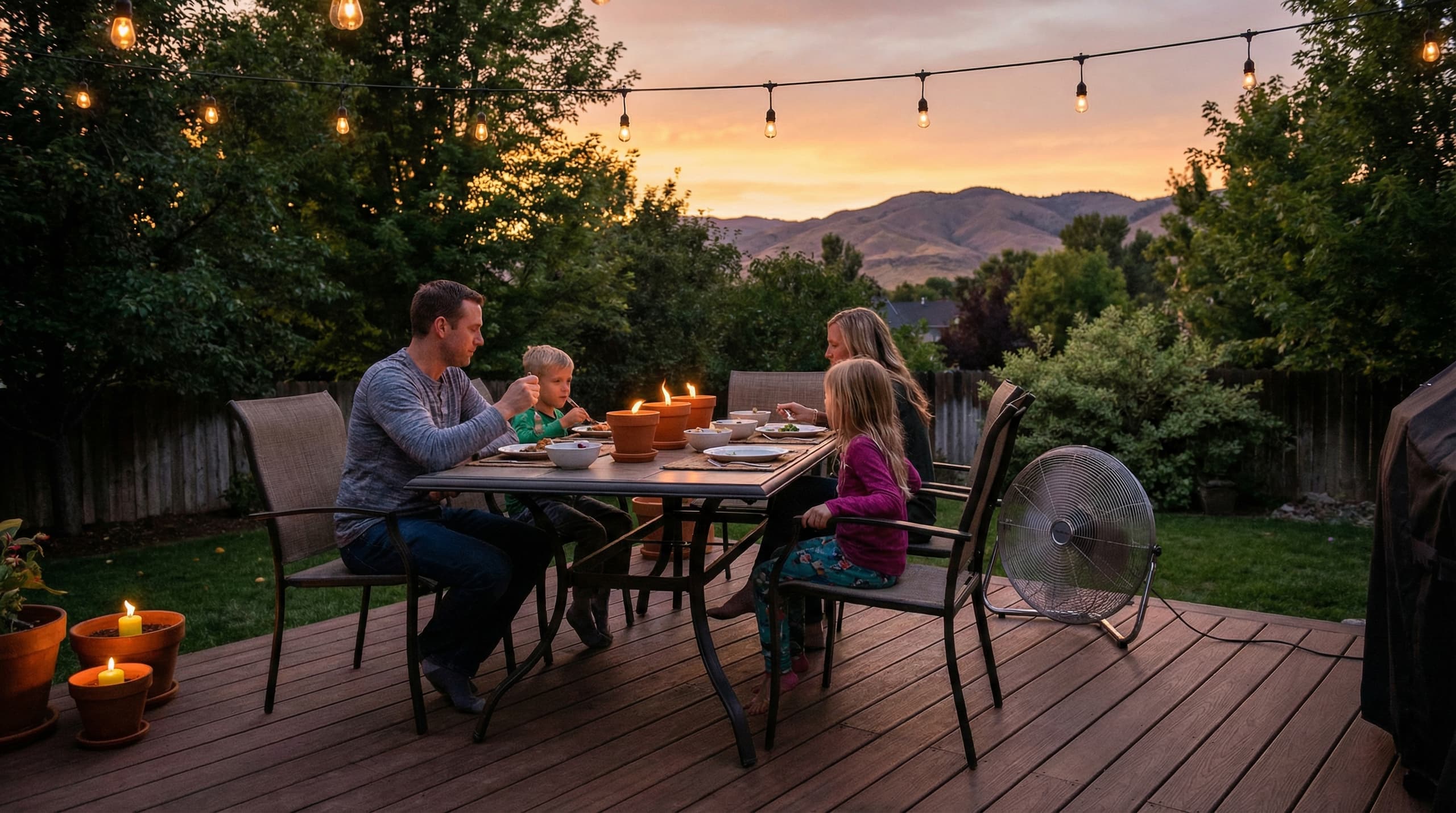
- Run fans on patios and decks. Mosquitoes are weak fliers and avoid moving air.
- Tone down the perfume. Floral scents and sweet shampoos attract bites.
Making Your Yard More Enjoyable
You can build a layered defense that lets you actually use the patio in August.
- Patio fans create the air movement mosquitoes avoid. Ceiling fans work too.
- Citronella candles and torches help in the immediate few feet, not the whole yard.
- CO2 mosquito traps can pull adults out of the local population over weeks.
- Trim landscaping so adults have fewer shaded resting spots during the day.
- Screen porches and pergolas for evening outdoor dinners and bonfires.
- Mosquito dunks treat any water feature you cannot drain. Safe for pets and fish.
Professional Mosquito Treatment in Boise
When source reduction is not enough, professional perimeter treatment is the next layer. The goal is to kill the resting adults that fly into your yard from the neighborhood, before they bite.
Our quarterly service uses organic-based, hospital-grade products applied to the shaded vegetation, eaves, and fence lines where adults rest by day. For the full summer playbook, see our Idaho pest calendar.
- Perimeter treatment targets the resting spots adults use during daylight.
- Vegetation treatment covers shaded shrubs, ornamentals, and fence corners.
- Breeding site treatment addresses water features you cannot drain.
- Peak-season timing matters. We push extra attention to mosquitoes from June through August.
- Ongoing protection comes from quarterly service that maintains the barrier all year.
Mosquito-Borne Disease in Idaho
For most healthy adults in the Treasure Valley, mosquitoes are a nuisance, not a health emergency. That said, disease risk is real and worth understanding.
- West Nile virus is established in Idaho. Most infections cause no symptoms.
- Severe illness is rare. When it happens, the elderly and immunocompromised are most at risk.
- Culex tarsalis is the primary vector. It peaks late July and August at dusk.
- Prevention works. Avoiding bites eliminates the disease risk entirely.
- Symptoms to watch for include fever, headache, and body aches days after mosquito exposure.
Ready to Take Your Yard Back This Summer?
Mosquito pressure in Boise is real, but it is also manageable. Kill the standing water on your property, dial in personal protection at dawn and dusk, and let a quarterly perimeter treatment hold down the resting population.
Green Guard Pest Control covers Boise, Meridian, Eagle, Nampa, Caldwell, Star, and Kuna. Our quarterly service starts with a $49 first treatment, uses organic-based products safe for kids and pets, and comes with a free re-service guarantee. If pests come back between visits, we come back free.
Call (208) 297-7947 to get on the schedule. Same-day service is often available.
Frequently Asked Questions
When is peak mosquito season in Boise?
Quick answerPeak mosquito season in Boise runs late June through August, with the highest biting pressure in July.
Activity tracks the irrigation calendar, picking up once nights stay above 50 degrees and tapering in mid-September when water deliveries shut off.
Why does the Treasure Valley have so many mosquitoes?
Quick answerFour irrigation districts (Boise, Nampa-Meridian, Pioneer, and Settlers) push surface water through neighborhoods from April into October.
That moisture, combined with the Boise River, urban ponds, and warm summer nights, gives mosquitoes the standing water and warmth they need to breed all summer.
How do you reduce mosquitoes in a Boise yard?
Quick answerStart with source reduction.
Walk the property weekly and dump every container holding water (plant saucers, bird baths, kids toys, tarps). Trim shaded shrubs where adults rest, run fans on patios, and add a quarterly perimeter treatment to kill the resting adults that fly in from the neighborhood.
Why are there so many mosquitoes near the Boise River?
Quick answerThe Boise River and its connected canals, ponds, and wetlands provide extensive breeding habitat.
Riverfront and canal-side properties always have higher pressure than properties two miles uphill. Personal protection and professional perimeter treatment matter even more in those neighborhoods.
Do mosquito-repelling plants really work?
Quick answerPlants like citronella, lavender, and marigolds contain compounds mosquitoes dislike, but they do not release enough into the air to protect a yard on their own.
Crushing the leaves helps in the immediate area. Treat them as a small piece of a larger strategy, not a standalone fix.
Are bug zappers effective against mosquitoes?
Quick answerNo.
Studies show less than 1 percent of insects killed by zappers are mosquitoes. Zappers mostly kill harmless and beneficial bugs that are drawn to UV light. CO2 traps that mimic human breath are far more selective for biting mosquitoes.
Can professional treatment eliminate all mosquitoes?
Quick answerNo treatment eliminates 100 percent of them, because adults fly in from surrounding properties every day.
A professional perimeter treatment cuts down the resting population on your property. Paired with source reduction and personal repellent, that is enough to actually enjoy the patio in July.