Quick answer
Wasps spike in Boise summers because mild winters preserve more overwintering queens, and the Treasure Valley's long warm season (plus abundant food from gardens, hummingbird feeders, and fallen fruit) lets colonies grow huge by mid-summer. Paper wasps, yellow jackets, and bald-faced hornets all peak between mid-June and early September here. Small starter nests on a reachable eave can be safely handled DIY. Ground nests, wall-void nests, anything bigger than a softball, or anything needing a ladder is a call-a-pro job.
Key Takeaways
- Wasp populations boom in Boise summers because mild winters protect overwintering queens and irrigation plus long warm seasons fuel rapid colony growth June through September
- Three species dominate Treasure Valley summers: paper wasps on eaves now, yellow jackets in wall voids and ground burrows by July, bald-faced hornets in trees by August
- Peak wasp activity in Boise runs mid-June through early September. August is the most aggressive month because colonies are at maximum size
- Safe DIY is limited to small, reachable paper wasp starts on a single-story eave. Never DIY a ground nest, a wall-void nest, a hornet nest, or anything bigger than a softball
- Green Guard wasp service starts with a $49 first service on a quarterly plan and includes our free re-service guarantee. Call (208) 297-7947
In this article

Why Are There So Many Wasps in Boise This Year?
Wasps spike in Boise summers because mild winters preserve more overwintering queens, and the Treasure Valley's long warm season (combined with abundant food from gardens, hummingbird feeders, and fallen fruit) lets colonies grow huge by mid-summer. Paper wasps, yellow jackets, and bald-faced hornets all peak between mid-June and early September here.
If you've stepped outside in the last two weeks and felt like every eave, hummingbird feeder, and shrub has its own little air force, you're not imagining it. Paper wasp pressure across Boise, Meridian, and Eagle builds fast in early summer. The reasons are pretty straightforward once you look at the winter we just had and the way Treasure Valley summers feed wasp colonies.
This guide walks through what's driving the boom, which species you're actually seeing, when it peaks, and the hard line between what you can safely treat yourself and what you need to call a pro for.
What's Driving the Wasp Boom in Treasure Valley Summers
Wasp populations don't grow in a straight line. They explode when several conditions stack up at once. This year, most of them did.
- Mild winter survival. Only fertilized queens survive the cold. They tuck into wood piles, attic voids, and siding gaps in October and stay there until spring. A mild Boise winter (which is what we just had) means more queens make it through. Every surviving queen starts a new colony in April. More queens. More nests. Simple math.
- A wet spring fed the food chain. Wasps are not just sugar-eaters. The workers hunt caterpillars, aphids, and soft-bodied insects to feed the larvae back in the nest. A wet, green spring across the Treasure Valley produced a heavy crop of prey insects, which means colonies grew faster than they would in a drought year.
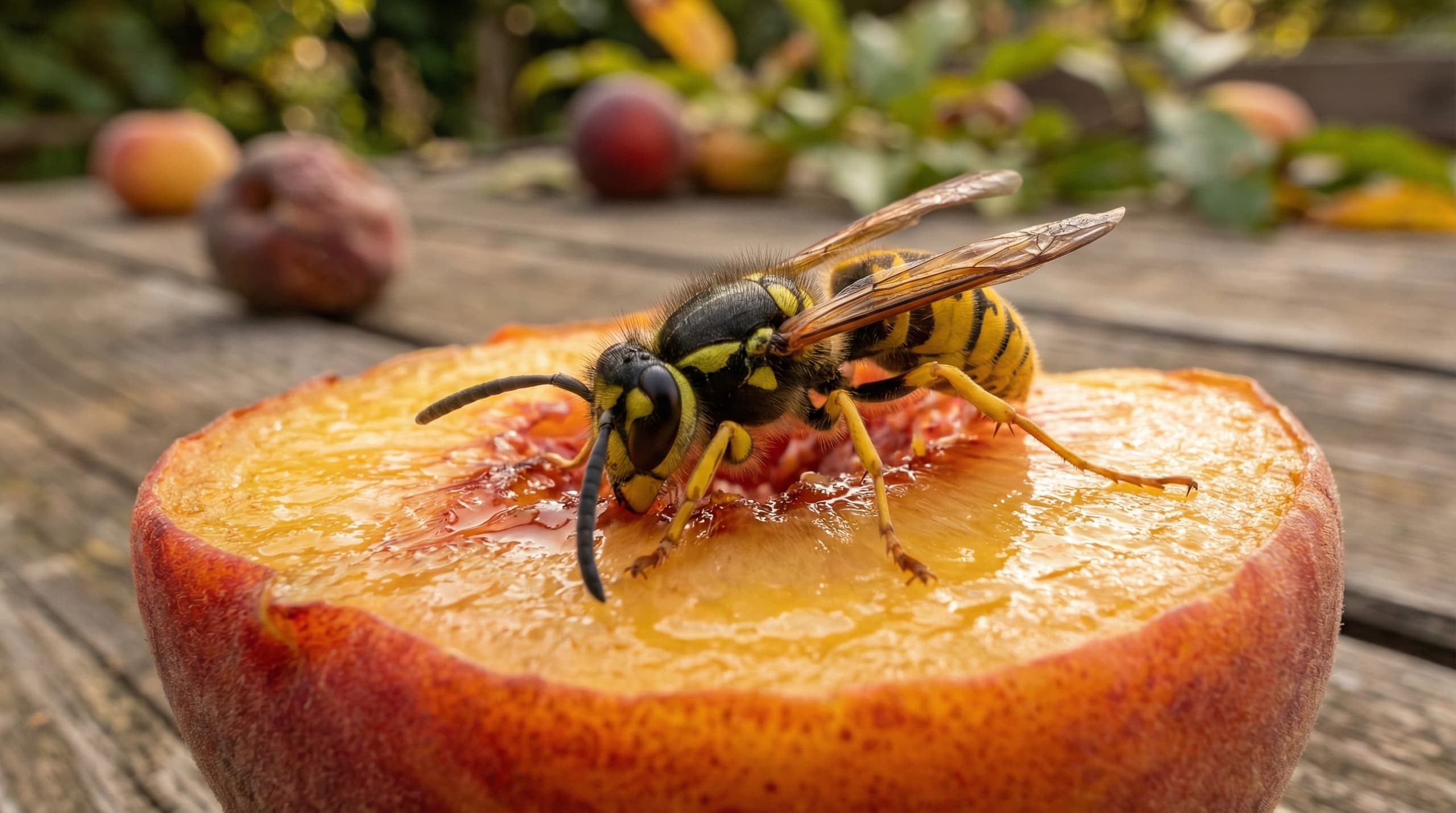
- Backyard food sources keep them home. Hummingbird feeders, fallen apricots and plums in July, open soda cans on the patio, dog food bowls left out, sticky popsicle drips on a kid's picnic table. To a foraging worker wasp, your yard is a buffet that resets daily.
- Irrigation gives them water. Wasps need water to make nest paper and to cool the colony when temperatures hit the 90s. Treasure Valley irrigation runs from May through September. We are watering their nurseries for them whether we mean to or not.
- The warm season is just longer here. Wasp colonies grow continuously from April through September. A long warm Boise summer (with a slow cool-down into October) gives colonies an extra four to six weeks of growth compared to mountain or northern Idaho areas.
Which Wasps Are You Actually Seeing Right Now?
Three species drive almost all wasp problems in the Treasure Valley from June through September. Knowing which one you're dealing with changes whether you can DIY it and how risky the nest is.
Paper Wasps (the umbrella nests under your eaves)
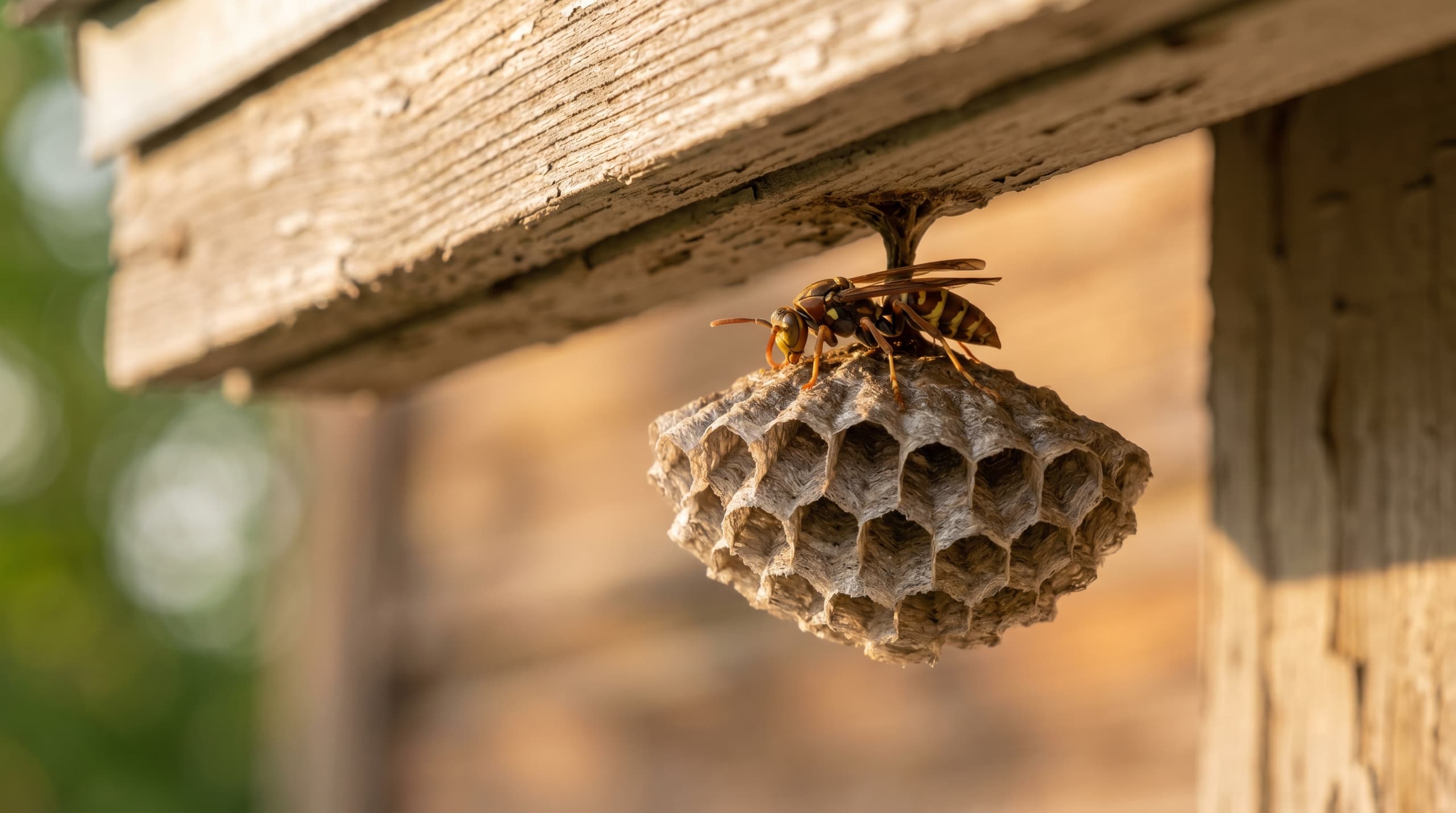
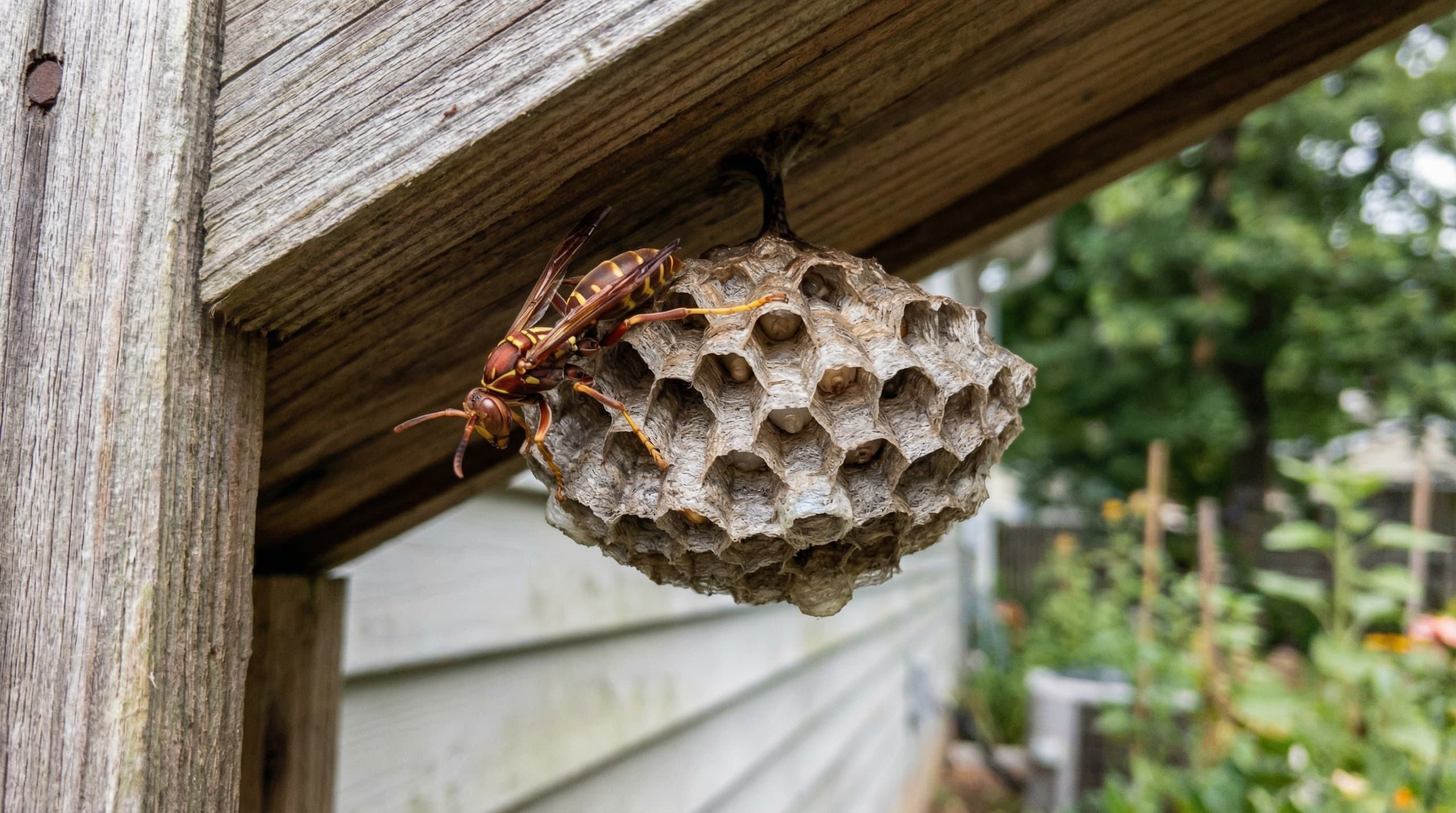
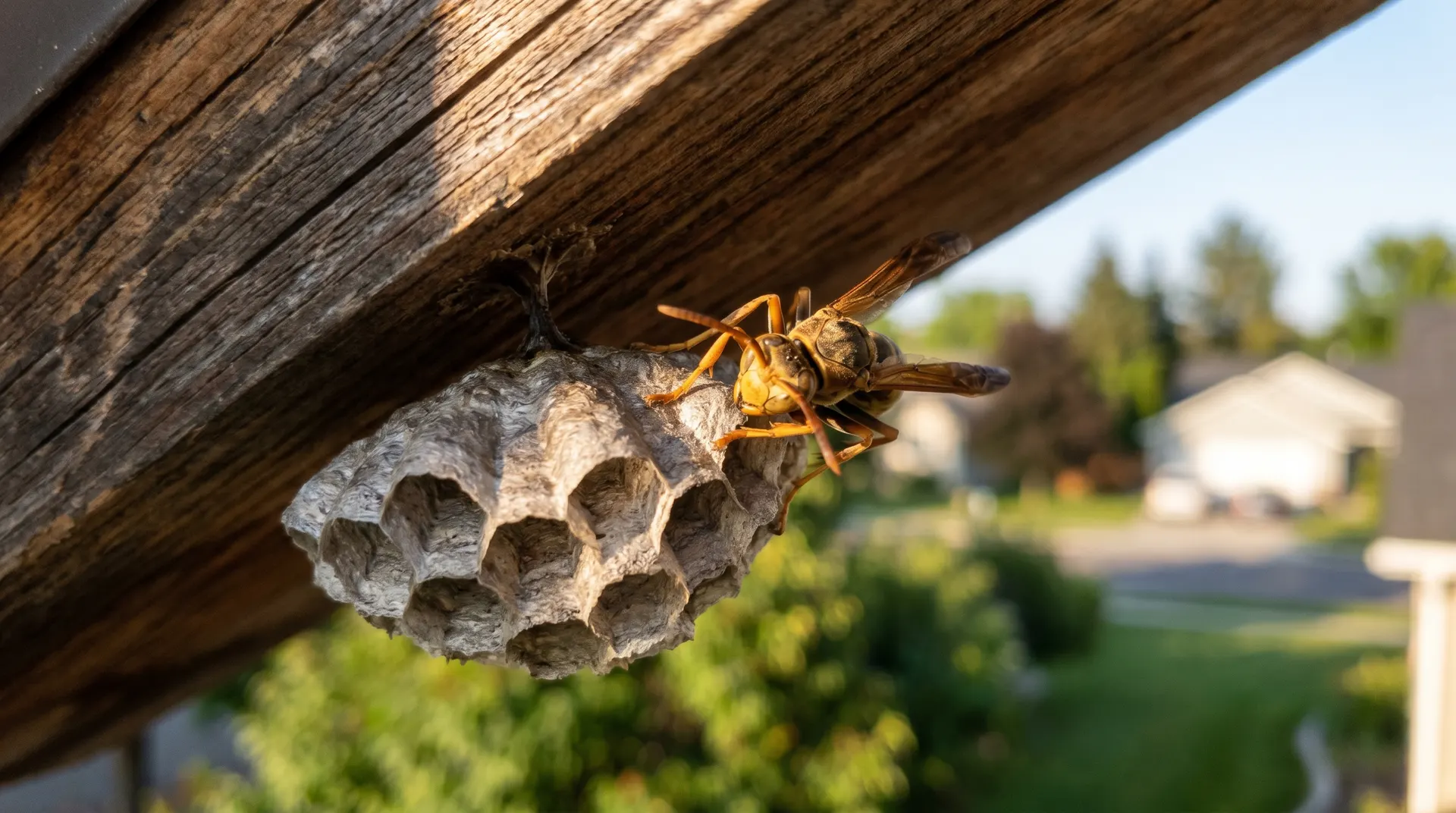
If you're looking up at your eave or porch ceiling and seeing a small, gray, umbrella-shaped nest with open hexagonal cells facing down, that's a paper wasp. Boise gets two main species: the European paper wasp (yellow and black, sometimes mistaken for a yellow jacket) and the native northern paper wasp (reddish-brown with darker wings).
Paper wasp nests stay relatively small (about 20 to 100 workers at peak) and the wasps are not aggressive unless you get within a foot or two of the nest. They're the species you're most likely to see on eaves, under deck railings, inside playhouse roofs, and tucked behind shutters right now in June. For the full identification rundown and what to do at each life stage, see our paper wasps in Idaho guide.
Yellow Jackets (the ones in wall voids and the ground)
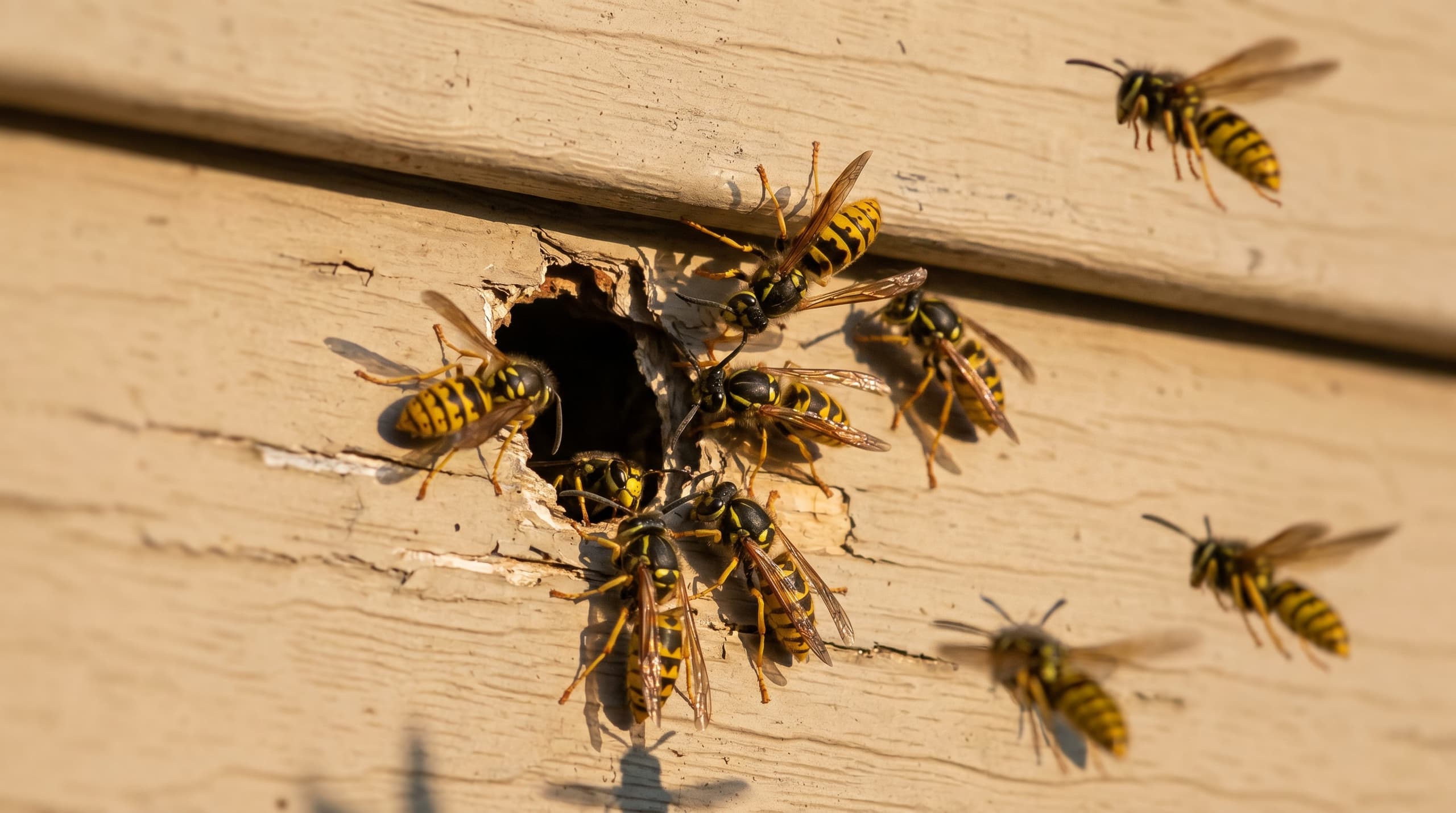
Yellow jackets are the short-tempered cousins. Bright yellow and black, fast flyers, and they nest hidden. By July, they're in old rodent burrows in the lawn, inside hollow tree stumps, in wall voids behind siding gaps, and in the spaces between landscape rocks.
A yellow jacket colony can hit 1,500 to 5,000 workers by late summer. You usually don't see the nest. You see a stream of yellow jackets going in and out of a hole. Or worse, you mow the lawn and step on the entrance. They are the species responsible for most late-summer stings in Boise. If you've found a hidden colony, our yellow jacket nest removal guide walks through exactly how we handle wall and ground nests.
Bald-Faced Hornets (the big gray football nests in trees)
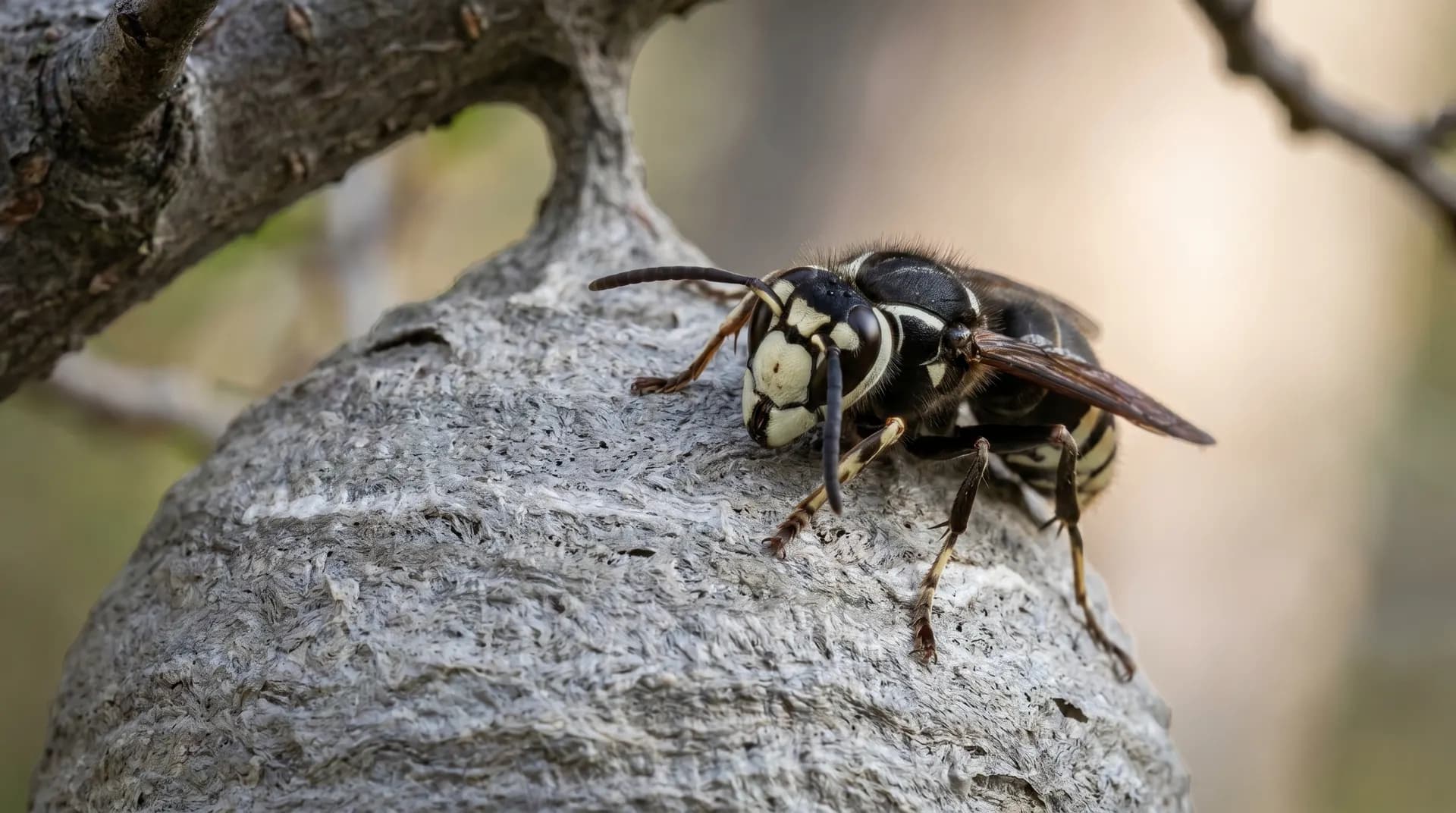
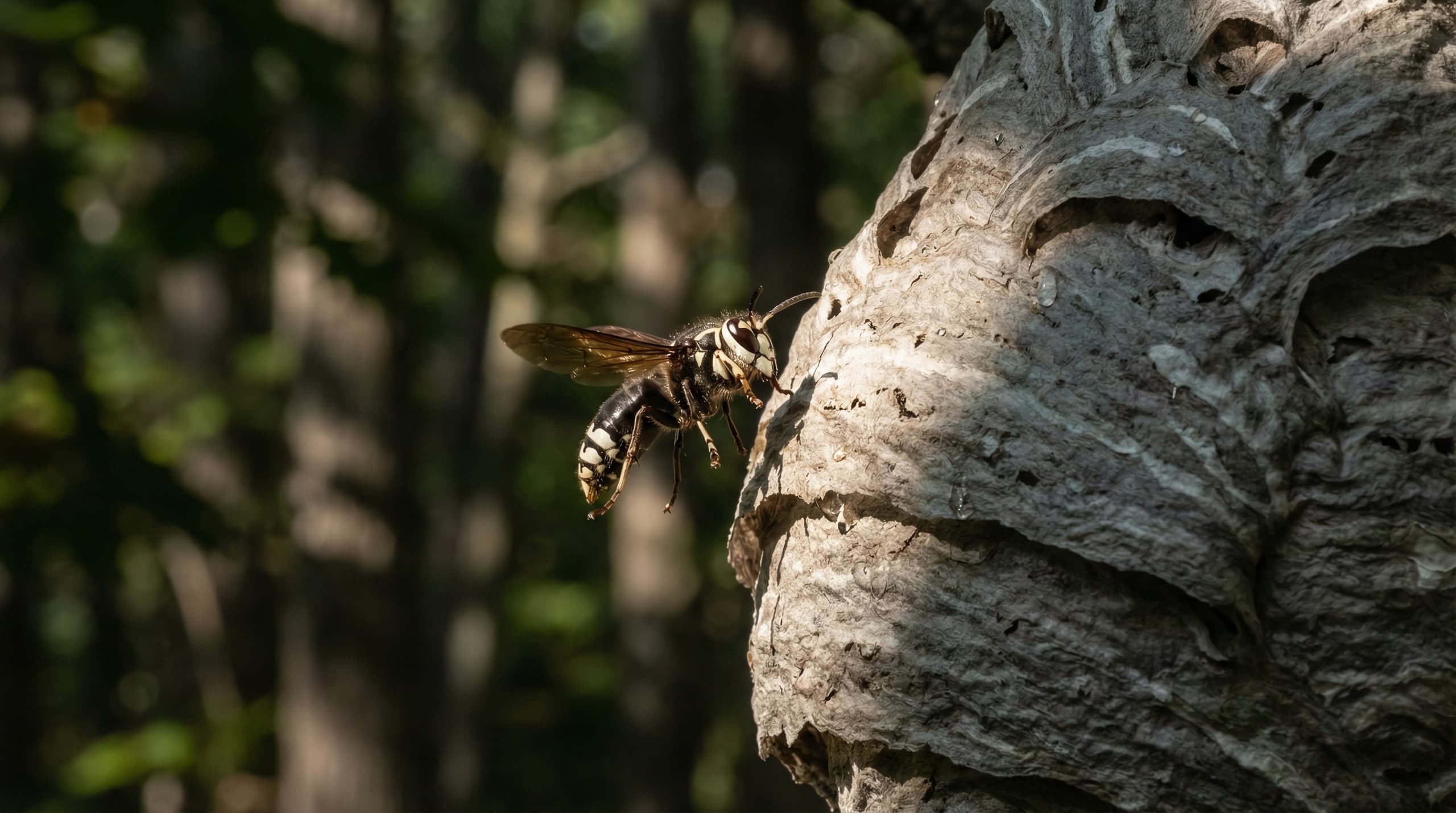
Bald-faced hornets aren't true hornets (they're a large species of yellow jacket), but they behave like a different animal. They build big, enclosed, football-shaped paper nests up in trees, on the side of houses, on barn rafters, or in dense shrubs. The nests are easy to miss in June (still small, hidden by leaves) and very hard to miss by late August (the size of a basketball, sometimes bigger).
These are the wasps you do not poke at, ever. They defend their nests aggressively from 10 to 15 feet away, can sting repeatedly, and they spray a defensive chemical that targets your face and eyes. Full identification, behavior, and removal info is in our bald-faced hornet guide for Idaho.
When Are Wasps Worst in Boise?
Mid-June through early September. That's the window when colonies are at working size, workers are out foraging all day, and homeowner sting risk is highest. August is the single most aggressive month because colonies have hit their seasonal peak and food competition is fiercest.
Here's how a typical wasp year unfolds in the Treasure Valley:
- April to early May. Overwintering queens emerge and scout for nest sites. You see big lone wasps. No workers yet. Now is the easiest time to knock down a starter nest because there's just one wasp on it.
- Late May to early June. Queens have built golf-ball-sized nests and the first batch of workers is hatching. Pressure is still light but visible.
- Mid-June through July. Colonies double in size every couple of weeks. Workers are out hunting and gathering. This is when most people first notice a nest on the eave or yellow jackets at the picnic table.
- August. Peak. Yellow jacket colonies are at full size and the colonies start producing reproductives (next year's queens), which makes the workers especially defensive. Bald-faced hornet nests are basketball-sized and visible.
- September. Pressure stays high through Labor Day, then falls off as nights cool. Hornet nests become obvious as leaves drop. Colony collapse begins.
- October. Foragers thin out. Mated queens leave the nest to find overwintering spots (which is often a soffit, attic, or wall void on a Boise home).
What You Can Safely Handle Yourself
We're not going to tell you every wasp situation needs a pro. Plenty don't. There's a clear set of conditions under which DIY is fine, and we'd rather you save the call when you can.
Safe DIY territory looks like this:
- A small paper wasp nest on a single-story eave you can reach from the ground. Under softball size, fewer than 20 wasps visible. Use a jet-spray wasp can rated for 20-plus feet, treat at dawn or dusk when wasps are on the nest and inactive, stand with the wind at your back, and have a clear escape path.
- Knocking down old, abandoned nests in winter or early spring. Once a nest is empty, it stays empty (wasps build fresh nests each year). Knocking the paper down in March is a free win and removes a visual cue that the spot is a good nest site.
- Removing food and water attractants. Take in hummingbird feeders by mid-July if wasp pressure gets bad, or hang them away from doorways. Pick up fallen fruit under trees. Cover trash cans. Wipe down patio tables. Move pet food bowls inside.
- Sealing small gaps before they become nest entries. A pea-sized gap under siding, a torn vent screen, a hole around a hose bib. Caulk it in May before queens find it. Much easier than dealing with an established colony in July.
- Hanging decoy fake nests. The evidence is mixed but there's no harm. Some homeowners swear by them in early spring as a queen deterrent. They will not move an established colony.
When You Should Absolutely Not DIY a Wasp Nest
This is the part of the article that matters most. Every summer, some Boise homeowners try to handle a nest that is past the DIY line and end up with a hospital trip, a swollen face, or a swarm in the kitchen. The line is not subtle.
- Any nest inside a wall void. If you see wasps streaming in and out of siding, a soffit vent, or a gap around a window, do not seal the hole and do not spray into it. You'll drive the colony deeper into your walls (and sometimes into the living space). This needs targeted treatment at the entry point and the colony killed in place.
- Any nest in the ground. Yellow jacket ground nests have hidden colony size. The visible hole shows one or two workers. There may be thousands underground. Pouring gasoline down the hole is dangerous, illegal, and ineffective. Stepping on the entrance triggers a defensive swarm.
- Any nest bigger than a softball. That's the population threshold where the wasps will overwhelm a single can of spray before the active ingredient knocks them down.
- Anything that requires a ladder. A wasp coming at your face while you're 12 feet up is how people fall. Even a small reachable-from-the-ladder paper wasp nest is a pro job. Treat the falling risk as the bigger threat, not the sting.
- Any bald-faced hornet nest. These defend aggressively from 10 to 15 feet away. They can sting repeatedly. They target the face. There is no DIY safe distance.
- Any nest near a doorway, walkway, kid play area, or pet run. Even if it looks small, the foot traffic is going to provoke them. Get it gone fast and don't experiment.
- You or someone in your household is allergic. Any sting allergy at all. Don't be the test subject.
When It's Time to Call a Pro (and What It Costs)
If you're in any of the situations from the list above, this is what calling Green Guard looks like. We treat wasp nests as part of our regular pest control service, not as a separate add-on. The first treatment is $49 with a quarterly plan, which covers the visible nest plus a full exterior barrier on your home (foundation, eaves, window frames, soffits, garage doors). That barrier is what prevents the next wave of queens from picking the same spot.
If you just want a single nest gone and aren't ready to start an ongoing plan, one-time wasp nest removal is available too. Cost depends on nest size, location, and access. Reachable paper wasp nests are quick. Wall-void colonies and big bald-faced hornet nests in trees take more time and gear. For the full pricing rundown and what's actually involved in a removal visit, see our wasp nest removal in Boise guide.
Our wasp service uses organic-based, hospital-grade products that are safe for kids and pets once dry (about 30 to 60 minutes). The treatment area is the perimeter of your home plus any active nest sites. The free re-service guarantee means if a new nest pops up between scheduled visits, we come back at no charge. For a quote on your property, call (208) 297-7947 or learn more about our wasp and hornet removal service.
Quick Answers to Wasp Questions Boise Homeowners Ask
A handful of myth-busting questions come up over and over in customer calls and in the Boise subreddit. Quick answers:
- Does WD-40 kill wasps? It can suffocate one wasp on contact, sure. It is not a nest treatment. The propellant is flammable, the oily residue stains siding, and it doesn't reach the queen or larvae inside the nest paper. Use an actual wasp spray rated for the distance you need.
- Will wasps sting if you stand still? Mostly no, if you're just passing through their flight path. Mostly yes, if you are within a few feet of the nest or you've already provoked them. Standing still doesn't help once they've decided you're a threat.
- What smell do wasps hate? Peppermint, eucalyptus, clove, and lemongrass essential oils are the most cited. They're a modest deterrent at best. They will not move an established colony. They can help slightly at a picnic table.
- Will killing one wasp attract more? Yes, especially with yellow jackets. A crushed wasp releases an alarm pheromone that signals nest mates to come help. If you have to kill one, do it well away from the nest and walk away from the area.
- Why are there suddenly so many wasps on my hummingbird feeder? By July, workers are foraging for high-energy carbs to feed colony growth. Sugar water is the easiest score in your yard. Bring the feeder in for a week or move it to a corner of the property away from your sitting areas, and the wasps will redistribute.
More Boise Wasp Resources
This post is the seasonal big-picture overview. If you want a deeper dive on a specific species, situation, or season, we've covered each one in detail:
- Spring wasp prep: Our spring wasp control guide for Boise walks through the April through May queen-scouting window and why it's the cheapest time to get ahead of the year.
- Identification: Not sure if it's a wasp, a bee, or a hornet? See our bee vs wasp identification guide. Bees we leave alone. Wasps we treat. Big difference.
- Hidden colonies: Yellow jacket in the wall or ground? Step-by-step removal logic in our yellow jacket wall and ground nest guide.
- Removal cost and process: Our wasp nest removal in Boise guide covers pricing, timing, and what a treatment visit actually looks like.
- Hornet specifics: Big football nest in your tree? The bald-faced hornet guide is the right read.
Get Ahead of Peak Wasp Season
If you're already seeing nests on the eaves or yellow jackets at the patio table, you are not behind. You're right on schedule for a Treasure Valley summer. The window to act before things get genuinely ugly (August) is right now.
Green Guard's quarterly plan starts with a $49 first treatment and covers wasps, ants, spiders, and the other 20-plus common Idaho pests in the same visit. We are locally owned in Boise, organic-based, and 4.9 stars across 170-plus reviews. If pests come back between visits, we come back free.
Call (208) 297-7947 for a quote on your home, or learn more about our wasp and hornet removal service. Same-day service is often available.
Frequently Asked Questions
Why are wasps so bad this year in Idaho?
Quick answerA mild winter let more overwintering queens survive, a wet spring fueled the insect prey that workers feed to larvae, and a long warm Treasure Valley summer is letting colonies grow continuously from April through September.
Combine that with backyard sugar sources (hummingbird feeders, fallen fruit, open drinks) and irrigation water, and you get a summer population spike across Boise, Meridian, and Eagle.
When are wasps worst in Boise?
Quick answerMid-June through early September.
August is the single worst month because yellow jacket colonies hit maximum size and their workers turn especially defensive as the colony starts producing next year's queens. Pressure drops off after the first cool nights in late September.
How do I get rid of a wasp nest myself?
Quick answerOnly if it is a small paper wasp nest (smaller than a softball) on a single-story eave you can reach from the ground without a ladder.
Treat at dawn or dusk with a jet-spray wasp can rated for at least 20 feet, stand with the wind at your back, and have a clear escape path. Never DIY a ground nest, a wall-void nest, a bald-faced hornet nest, or anything that needs a ladder.
Are wasps more aggressive in late summer?
Quick answerYes, noticeably.
By August, colonies are at peak population and the workers are competing harder for food. Yellow jackets in particular become more aggressive because the colony is producing next year's queens and the workers go into nest-defense mode. This is also when most late-summer sting incidents happen in the Treasure Valley.
How much does professional wasp nest removal cost in Boise?
Quick answerGreen Guard wasp treatment is included as part of our regular pest service, which starts with a $49 first treatment on a quarterly plan.
One-time wasp nest removal is available for homeowners who don't want an ongoing plan and is priced based on nest size, location, and access. Wall-void colonies and bald-faced hornet nests in trees take more time than a small reachable paper wasp nest. Call (208) 297-7947 for a quote on your specific property.